Palma vs Pollença: how Mallorca's lively island capital compares with the north's refined historic town, which to base in or visit, how to get between them, and how to do both.
What You Should Know
- Palma is Mallorca's island capital: a big, lively city with a vast seafront cathedral, a historic old town, the best food and nightlife on the island, an airport, and easy access to the whole of Mallorca. It is where most visitors base themselves.
- Pollença is the north's refined, upmarket historic town, known for its 365-step Calvari staircase, a famous Sunday market, and an arty, low-key feel. Its seaside sister, Port de Pollença, is a genteel bay and the gateway to Cap de Formentor.
- They are about 55 km apart, roughly an hour by car on the Ma-13 motorway or a direct intercity bus. There is no train, so a car is useful, especially for exploring the north from a Pollença base.
- This is really a base-and-day-trip choice: most visitors stay in Palma and can day-trip north, or choose a quieter Pollença base for the north and the mountains and day-trip into Palma.
Palma vs Pollença: The Short Answer
Palma vs Pollença is a choice between the island capital and the refined heart of the north. Palma is the big, handsome city, with the cathedral, the old town, the port, and the island's best food and nightlife. Pollença is a smaller, upmarket historic town set against the mountains, known for its 365-step Calvari staircase, a much-loved Sunday market, and the genteel bay of Port de Pollença, with Cap de Formentor close by.
Our short answer: base in Palma if you want the headline sights, the easiest access to the whole island, and plenty to do; choose Pollença if you want a quieter, more characterful and upmarket base with the north and the mountains on your doorstep. They are about an hour apart, so the two also pair well. The sections below compare them in detail, then explain how to get between them and how to do both.
Quick verdict, by what matters most to you:
| If you want… | Choose |
|---|---|
| City & culture | Palma |
| A refined historic town | Pollença |
| Nightlife & dining range | Palma |
| Cap de Formentor & the mountains | Pollença |
| A base for the whole island | Palma |
| The Sunday market & Calvari steps | Pollença |
Palma vs Pollença at a Glance
How the two compare on the things that usually decide where you stay. They play different roles: the all-round island base and the quiet northern retreat.
| Palma | Pollença | |
|---|---|---|
| Vibe | Lively island capital | Refined northern historic town |
| Size | Big city (~400,000) | Smaller town (~16,000) |
| Headline draw | Cathedral, old town, Bellver Castle | The 365 Calvari steps, Sunday market, Pont Romà |
| Getting there | Airport, central, walkable | Car or bus from Palma (no train), about an hour |
| Beaches | City beaches nearby (Playa de Palma) | Quieter; the genteel Port de Pollença bay |
| Food & nightlife | Huge range, late bars, fine dining | Smaller, calmer, upmarket |
| Gateway to | The whole island | Cap de Formentor & the north |
| Best for | First visits, a base, lots to do | Character, quiet, the north |
In short, we'd call Palma the all-rounder and the easier base for seeing Mallorca, while Pollença is the choice for a quieter, upmarket stay with the north close by.
Which One Should You Choose?
The quickest way to decide is to match each place to the trip you actually want.
Choose Palma if you:
- Want the headline sights, a real city, and the best food and nightlife.
- Plan to explore the whole island and want a central base near the airport.
- Are travelling without a car and want to lean on city buses, walking tours, and day trips.
- Want plenty to do across several days and a lively evening scene.
Choose Pollença if you:
- Want a characterful, upmarket historic town over a big city.
- Plan to explore the north: Cap de Formentor, the coast, and the mountains.
- Prefer a quieter, more local and refined feel with fewer crowds.
- Like the idea of the Sunday market, the Calvari steps, and the genteel Port de Pollença bay.
Most people don't realize Pollença has two parts: the historic inland town and Port de Pollença, its seaside resort a few kilometres away, so check which one your hotel is in before you book.
Palma: The Island Capital
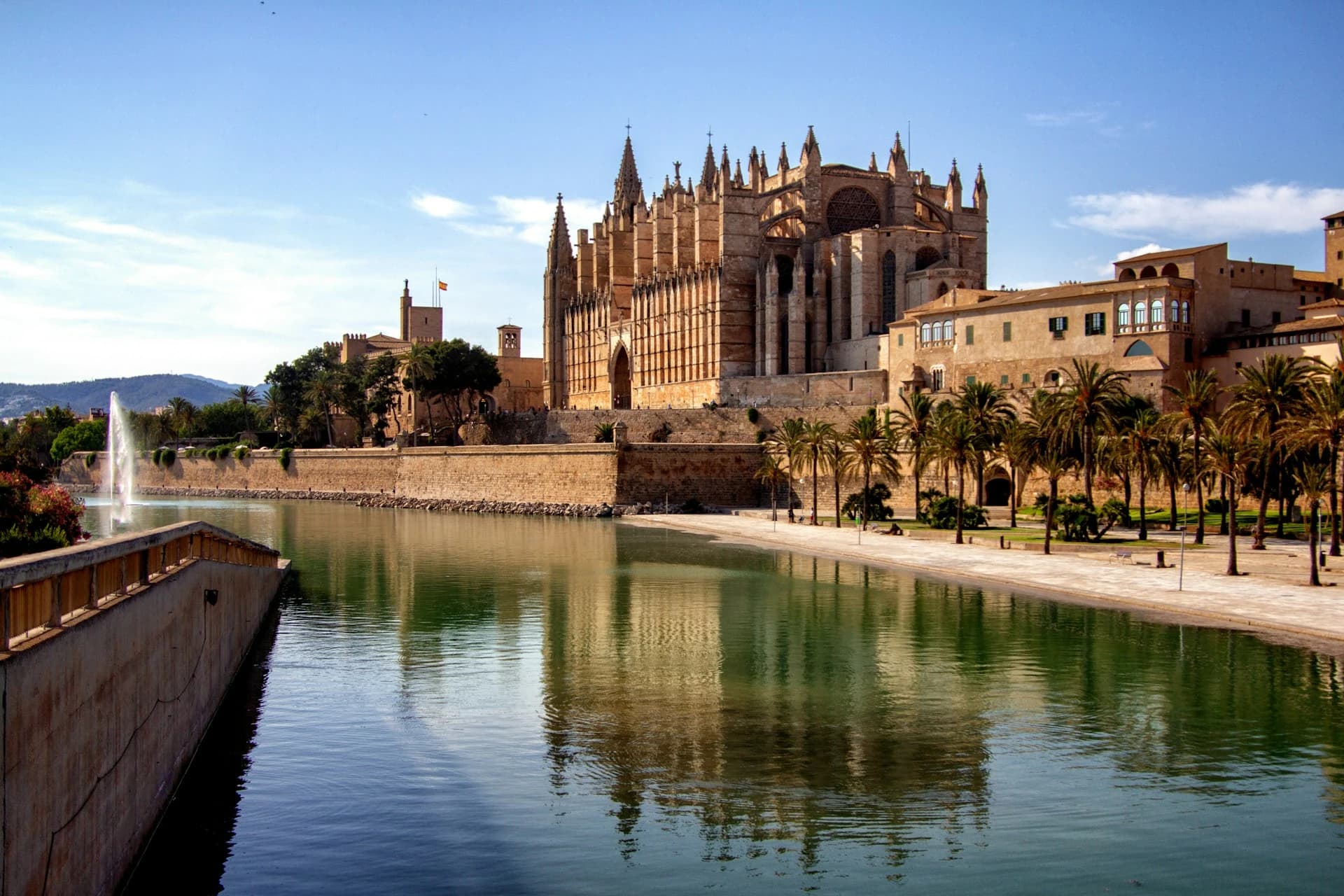
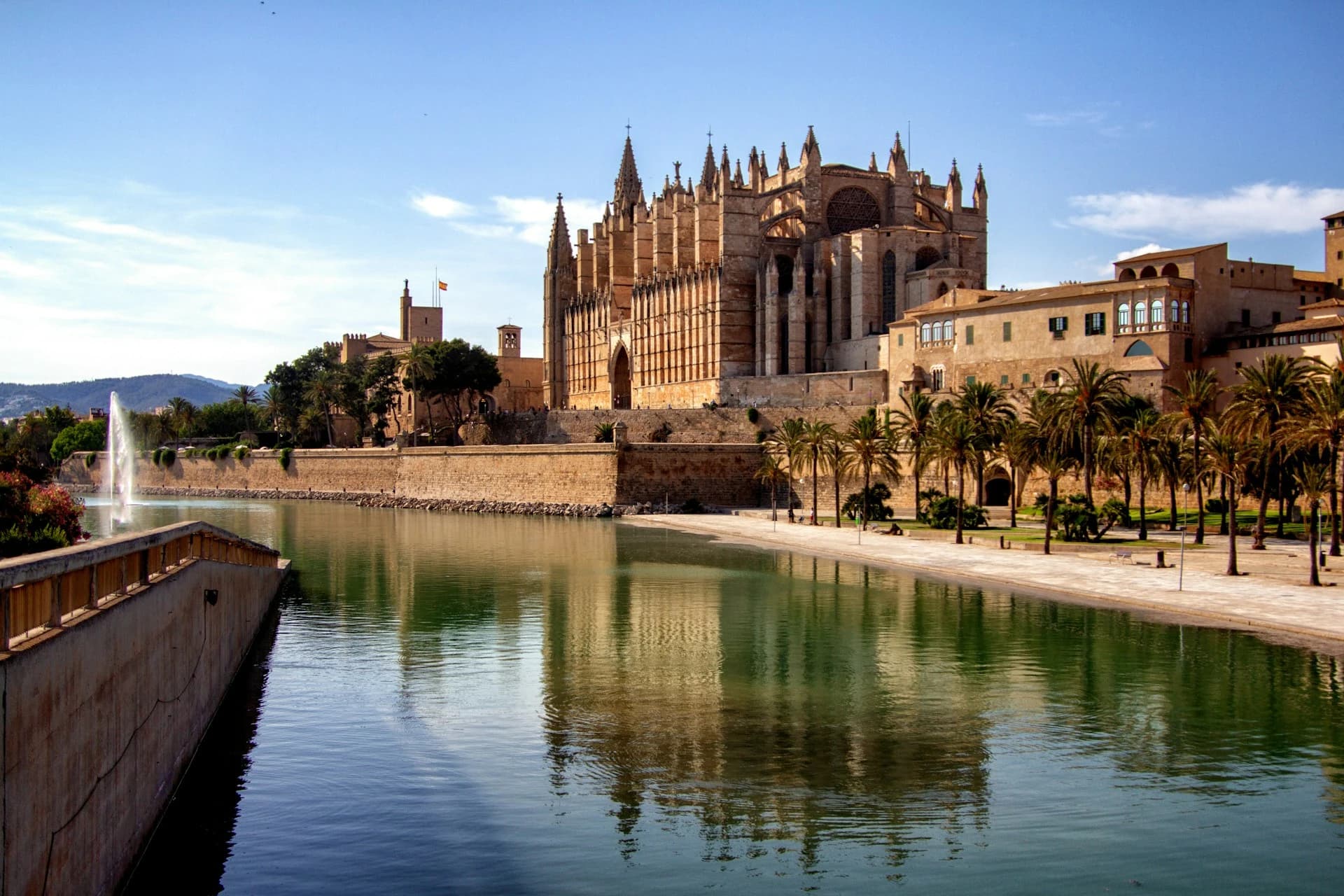
Palma is the obvious base for most trips. It is a proper Mediterranean capital, built around the vast seafront Gothic cathedral (La Seu), with a tangle of old-town lanes, the Almudaina palace, the hilltop Bellver Castle, a working port, and the island's best concentration of restaurants, bars, and shops. You can easily fill two or three days here without leaving the city.
It is also the most practical base. The airport is a short drive away, the city is walkable with good buses and the open-top hop-on hop-off bus, and almost every island day trip, from the Tramuntana island tour to the caves and boat days, runs out of or near Palma. The trade-off is that it is a busy city rather than a quiet retreat, and it is about an hour from the northern beaches and Cap de Formentor. For the city-versus-north-beaches question, see our Palma vs Alcúdia comparison.
Pollença: The Refined North
Pollença is the north's prettier, more refined town, set a little inland against the mountains. Its signature sight is El Calvari, a cypress-lined staircase of 365 steps climbing to a hilltop chapel with views over the rooftops, and its Sunday market is one of the biggest and best-loved on the island. Add the old Roman bridge (Pont Romà), a handsome main square, and an arty, upmarket feel, and it is a characterful place to base or wander.
Its coast is separate and gentle: Port de Pollença is a calm, genteel bay popular with families and sailors, and the scenic road from there leads out to Cap de Formentor, the island's dramatic northern tip. As a base it is quieter and more low-key than Palma, with fewer big-city facilities but easy access to the north's beaches, boat trips, and mountains. For how it compares with the north's bigger beach resort, see our Alcúdia vs Pollença guide.
Getting Between Palma and Pollença
The two are at opposite ends of the island, so the link matters more here than the journey.
- By car: The Ma-13 motorway runs most of the way, so driving takes roughly an hour. A car is also the most useful way to explore the north once you are up there.
- By bus: Direct intercity buses link Palma and Pollença in around an hour, a cheap and simple option if you are not driving.
- To Cap de Formentor: Easiest from Port de Pollença, with the scenic cliff road out to the lighthouse, a classic northern half-day.
There is no train to Pollença: the island railway runs to Sa Pobla and Manacor, not the north coast, so the bus or a car is the way to go.
How to See Both (and the North)
Our take is that you do not really have to choose: base wherever suits your trip and see the other as a day out. A common plan is a city base in Palma with a day in the north for the Calvari steps, the Sunday market, and Cap de Formentor, or a quieter base in Pollença with a day trip into Palma for the cathedral, old town, and dinner.
Either way, the north rewards a slower loop: Pollença and its port, Cap de Formentor, the Alcúdia bay beaches, and the s'Albufera wetlands all sit within a short drive. Most people don't realize how much the north offers on the water, so leave room for a sea-cave boat trip or a kayak alongside the town and beach time.
Compare the Best Boat Trips in Northern Mallorca
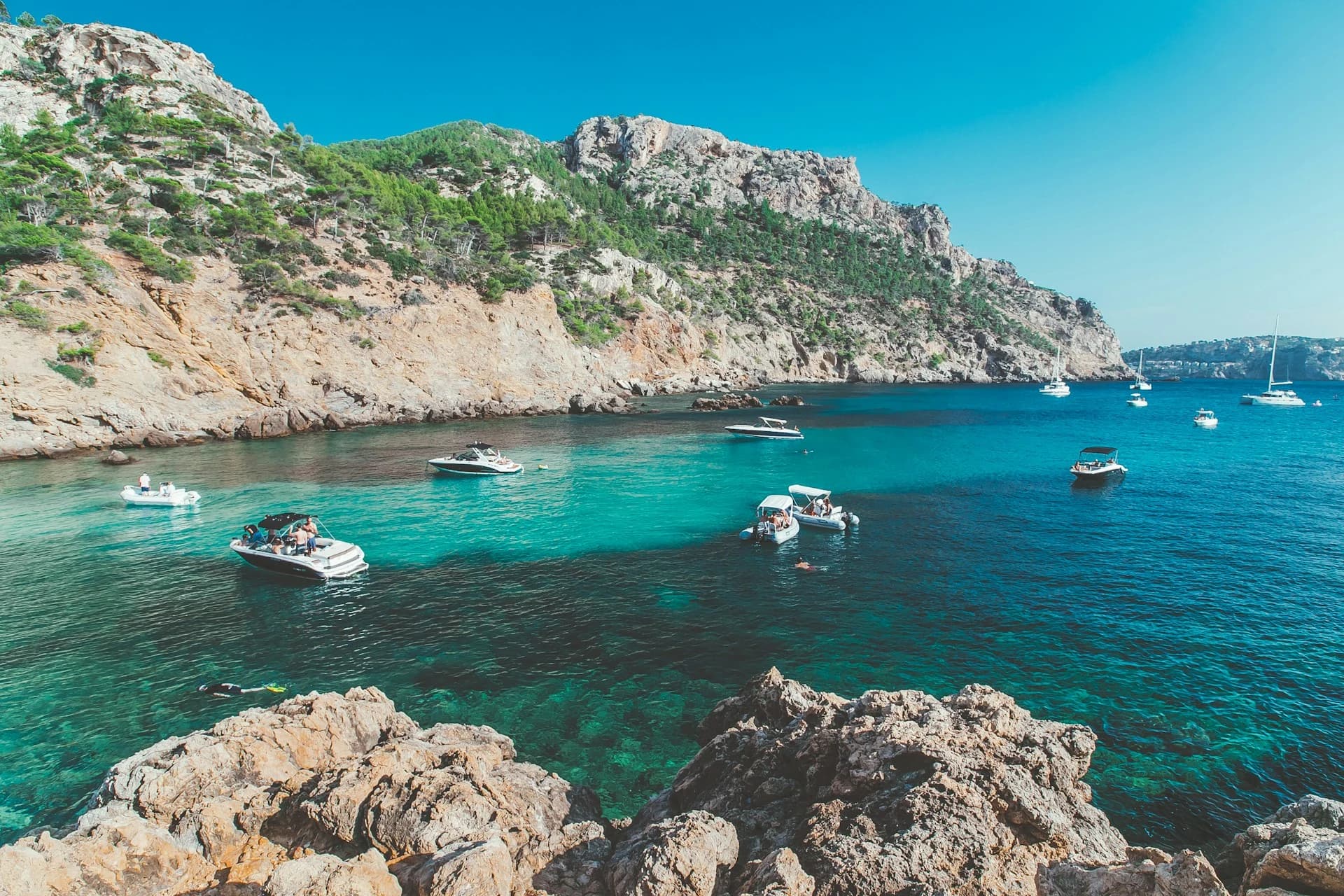
Whether you base in Palma or Pollença, the north's clear water and sea caves make a boat trip the standout day on the water, easy to reach from Port de Pollença and the Alcúdia bay. From a €33 Bay of Palma snorkel trip to a €75 Alcúdia sea-cave speedboat, three of the most-booked options compared. Click any to see full details.
Book the Most Popular Option Directly
Live availability for the most popular option, the Alcudia Sightseeing, Sea Caves & Snorkel Speedboat Tour (4.8 from 363+ reviews). Pick your date below.
- Free cancellation 24h
- Reserve now & pay later
- Snorkel gear included
- Sea caves + 40-min snorkel stop
- Clear north-coast water
- Minimum 4 passengers to run
We may earn a commission on bookings made through this widget — at no extra cost to you.
Where to Base Yourself
Three broad options cover most trips.
- Palma (best all-rounder): The easiest base for a first visit and for seeing the whole island, with the most hotels, restaurants, and transport links. Stay in or near the old town to be walking distance from the cathedral and the lanes.
- Pollença town (quiet and upmarket): Inland and characterful, best for a calmer, more cultural stay near the mountains, though you drive to the beach.
- Port de Pollença (genteel bay): A calm seaside base popular with families and sailors, and the closest to Cap de Formentor, if you want the north with a beach on the doorstep.
Average Hotel Prices: Palma vs Pollença
Cost tracks the character of each place. Palma has the widest overall range and the best value at the budget end, with plenty of city hotels. Pollença and Port de Pollença skew more upmarket and boutique, with fewer cheap rooms and a quieter, pricier feel. Here is the rough picture by tier.
| Tier | Palma (per night) | Pollença (per night) |
|---|---|---|
| Budget | from about €60 to €90 | from about €75 (limited choice) |
| Mid-range | about €120 to €200 | about €110 to €200 |
| Luxury / boutique | from about €280 | from about €250 |
These are approximate nightly rates for a double room in low to shoulder season, and they roughly double in the July and August peak. The takeaway: Palma wins on choice and value, works year-round, and has the top city and boutique end; Pollença costs a little more for a quieter, more characterful northern base. Note that many hotels in the north close from about November to March, so winter stays there are limited.
Best Time to Visit
Palma works year-round: the cathedral, old town, food, and museums are just as good in winter, when the city stays lively and mild. Pollença and the north are at their best from about May to October, when the sea is warm, the Formentor road and boat trips are running, and the town is busiest and liveliest. In winter much of the northern coast quietens down and some hotels close, though Pollença, as a working town, keeps more life year-round than a pure resort. In peak summer, Palma is hot and busy but full of energy, while Pollença is a cooler, calmer northern base. For the full month-by-month picture, see our guide to the best things to do in Mallorca.
From Our Experience
We've found the split is straightforward: choose Palma for a first trip, a city feel, and the whole island, and Pollença if you want a quieter, upmarket base with the north on your doorstep. When people are torn, basing in Palma and day-tripping north usually beats the reverse, since you keep the easiest access to everything else.
Tips for Deciding
- First trip or short stay? Lean Palma. It has more to do, the airport nearby, and works in any season.
- Focused on the north and the mountains? Lean Pollença. It is the closest characterful base to Cap de Formentor and the coast.
- Check town versus port: Pollença's historic town is inland; Port de Pollença is the seaside resort a few kilometres away.
- Consider a car for a Pollença base: it makes Formentor, the beaches, and the rest of the island far easier to reach.
- Mind the season: the north is best from May to October, and many hotels close in winter, so plan a cold-season trip around Palma.
How We Put This Comparison Together
The Spain Travel Insider team built this comparison from our in-depth Mallorca guides and from how these two places actually work for a trip: what there is to see and do in each, how easy they are to reach and base in, and how visitors typically combine them. Rather than crown a winner, we have matched Palma and Pollença to the kind of trip each suits best, because the right choice depends on whether you want a city base or a quiet, upmarket northern one, and on the time of year. Where it helps, we link to our full guides so you can plan the sights, the north, and the rest of the island.
Frequently Asked Questions
Is Palma or Pollença better?+
It depends on your trip. Palma is the better all-round base, with the headline sights, the best food and nightlife, the airport, and easy island access, and it works year-round. Pollença is the quieter, more upmarket and characterful choice, best for the north, the mountains, and Cap de Formentor.
How far is Pollença from Palma?+
About 55 km, at opposite ends of the island. The drive on the Ma-13 motorway takes roughly an hour, and a direct intercity bus takes a similar time. There is no train to Pollença.
Can you do Pollença as a day trip from Palma?+
Yes. Pollença is about an hour from Palma by car or bus, so it makes an easy day trip, often combined with the Sunday market, the Calvari steps, and the scenic drive out to Cap de Formentor.
What is Pollença known for?+
Pollença is known for its 365-step Calvari staircase up to a hilltop chapel, its large and popular Sunday market, the old Roman bridge, and an upmarket, arty feel. Its port, Port de Pollença, is a genteel bay and the gateway to Cap de Formentor.
Should you stay in Palma or Pollença?+
For a first visit or to see the whole island, stay in Palma: it has the most hotels, the best transport, and the airport. Stay in Pollença if you want a quieter, more upmarket base focused on the north and the mountains, ideally with a car.
Which is closer to Cap de Formentor?+
Pollença, specifically Port de Pollença, is far closer to Cap de Formentor, with the scenic cliff road leading out to the lighthouse. From Palma it is about an hour and a half each way, so it is easier as a day out from a northern base.
Does Pollença have a beach?+
Pollença town is set inland, but its seaside sister Port de Pollença has a calm, shallow bay beach popular with families and sailors. It is gentler and more sheltered than Palma's city beaches, and close to the wider northern coast.
Affiliate note: Some links on this page are affiliate links. If you book through them, we may earn a small commission at no additional cost to you.