Whether you have one day or three, here is how to structure a Seville trip: day by day, with the right order for the Alcázar and Cathedral, where to stay, and how to plan around the Andalusian heat.
What You Should Know
- Seville's historic core is compact and walkable. The Cathedral, the Real Alcázar, the Santa Cruz quarter, and the river are all within a 20-minute walk of each other, so you rarely need transport inside the center.
- The Real Alcázar and the Cathedral are the two sights to pre-book. Both use timed entry and sell out days ahead in spring and summer, so an early slot beats both the queues and the afternoon heat.
- From June to August, midday heat regularly tops 38°C. Plan indoor or shaded sights for the early afternoon, rest during the worst of it, and save the squares and riverside for the evening when the city comes alive.
- Two full days cover the essentials comfortably; three let you add Triana, a slower pace, or a day trip. One day is enough only for the Cathedral, the Alcázar, and a first taste of the old town.
How to Plan Your Seville Itinerary Day by Day
A well-planned Seville itinerary is less about cramming everything in and more about timing it around two things: the timed-entry tickets for the big monuments and the Andalusian heat. Whether you are working with one day, a Seville 2 day itinerary, or a full Seville 3 day itinerary, the compact center means you can see a lot on foot, as long as you sequence it well.
For the full breakdown of individual sights and experiences, see our guide to the best things to do in Seville. This Seville travel itinerary is about how to string them together across your trip.
In our view, the single biggest planning decision is when you visit the Real Alcázar and the Cathedral. Both need booking ahead, both are best early, and everything else in the old town flexes around them. The frameworks below are built around that reality.
Jump to your itinerary: 1 day | 2 days | 3 days
| Trip Length | What You Can Realistically Fit |
|---|---|
| 1 day | Cathedral and Giralda, Real Alcázar, a walk through Santa Cruz |
| 2 days | The above plus Plaza de España, Triana, and an evening flamenco show |
| 3 days | The full city at a relaxed pace, plus Metropol Parasol or a day trip |
Which Seville Itinerary Is Right for You?
Before the day-by-day plans, a quick way to self-select. Match your trip length to your travel style, then jump to the matching itinerary below.
| Itinerary | Best for | Pace |
|---|---|---|
| 1 day | Cruise passengers, layovers, a weekend add-on | Fast |
| 2 days | First-time visitors, a classic weekend in Seville | Comfortable |
| 3 days | Slow travelers, anyone wanting a day trip | Relaxed |
If you have longer, 4 days in Seville lets you keep the relaxed three-day pace and add a second day trip or a full morning in Triana without rearranging anything below.
Seville Itinerary at a Glance: Day by Day
The hour-by-hour shape of a three-day trip. A one-day visit is Day 1 compressed; a 48 hours in Seville plan is Days 1 and 2; the full 72 hours in Seville adds Day 3.
Day 1: The Old Town
| Time | Day 1 |
|---|---|
| 9:00 | Cathedral & Giralda climb |
| 10:45 | Real Alcázar & gardens |
| 13:00 | Tapas lunch in Santa Cruz |
| 15:00 | Rest through the midday heat |
| 17:00 | Plaza de España & María Luisa Park |
| 21:00 | Flamenco show |
Day 2: Triana and the River
| Time | Day 2 |
|---|---|
| 10:00 | Triana: Mercado & Calle Betis |
| 12:00 | Puente de Isabel II & Torre del Oro |
| 13:30 | Guadalquivir river cruise, then lunch |
| 16:00 | Maestranza bullring (optional) |
| 19:30 | Metropol Parasol at sunset |
| 21:00 | Dinner in Alameda or Feria |
Day 3: Slow Seville or a Day Trip
| Time | Day 3 |
|---|---|
| 9:00 | Casa de Pilatos or a walking tour |
| 11:00 | Cooking class or the Triana market |
| 13:00 | Long lunch, then a favorite plaza |
| Evening | Farewell tapas crawl |
Prefer to spend day 3 out of town? Swap it for a day trip: Córdoba is about 45 minutes by fast train. See day trips from Seville.
Seville Airport and Getting Around
Seville Airport (SVQ) sits about 10 km northeast of the center, roughly a 20 to 25 minute drive. Your options into town:
- Taxi: a fixed official tariff to the center, around €25 by day and a little more at night and on holidays. The quickest door-to-door option.
- EA airport bus: around €4, running to the center (Plaza de Armas and Santa Justa station) in about 35 minutes.
- Private transfer: booked ahead for a fixed price, useful with luggage or a late arrival. See our Seville airport shuttle guide.
Once you are in the center, you mostly walk. The old town is largely pedestrian and the main sights cluster tightly, so you will not need the metro or buses for a standard itinerary. For covering more ground, the flat, compact layout suits a bike tour, and a tuk-tuk tour is an easy way to link the sights on a hot day. A tram runs a short central route, and taxis are cheap for the odd longer hop, such as out to Triana late at night.
Walking Times Between Seville's Main Sights
The old town is small, which is what makes these itineraries work on foot. Approximate walking times between the key stops:
| Route | On foot |
|---|---|
| Cathedral → Real Alcázar | 2 min |
| Real Alcázar → Santa Cruz | 3 min |
| Santa Cruz → Plaza de España | 18 min |
| Cathedral → Torre del Oro | 8 min |
| Torre del Oro → Triana (across the bridge) | 12 min |
| Cathedral → Metropol Parasol | 12 min |
Nothing in the core is more than about 20 minutes on foot, so you can follow these itineraries without a single bus or taxi inside the center.
Three Rules for Planning Your Seville Days
Book the Alcázar and Cathedral first
These are the two sights that dictate your schedule. Both use timed-entry tickets that sell out days ahead in spring and summer, and both are far more pleasant early, before the crowds and the heat. Lock in a morning slot for each, then build the rest of the day around them. Our guides to the Real Alcázar and the Cathedral and Giralda cover ticket options.
Respect the heat and the rhythm
Seville runs on a different clock, especially in summer. Mornings and evenings are for being outside; the early afternoon is for lunch, shade, or an air-conditioned museum. Dinner starts late, often after 9 PM, and the squares fill up once the sun drops. Fighting that rhythm is the fastest way to a miserable, overheated afternoon.
Cluster by neighborhood
Group your days geographically. The Cathedral, the Alcázar, and Santa Cruz form one tight cluster; Plaza de España and María Luisa Park sit just south; Triana is across the river; and Metropol Parasol anchors the north. Doing one area at a time keeps you from crisscrossing the city in the heat.
What to Book, and in What Order
The timed-entry sights are the only real booking pressure on a Seville trip. Reserve them in this order, because the first two sell out first:
- Real Alcázar. The tightest timed slots, so book this first.
- Cathedral and Giralda. Also timed; pair it with an early Alcázar slot the same morning.
- Flamenco show. The good intimate venues fill their evening seats.
- Food tour or cooking class. Smaller groups, so worth reserving, but the most flexible of the four.
What to book before you fly (2 to 8 weeks ahead): your hotel in the center, the Real Alcázar, the Cathedral, and at least one flamenco show. Everything else on this page can be arranged spontaneously once you arrive. Our guides to the Real Alcázar, the Cathedral, and flamenco shows cover the options.
One Day in Seville
A Seville one day itinerary is tight but doable, because the two headline sights sit next to each other. The trick is starting early and not trying to add a fourth major thing.
Morning: Cathedral and Giralda
Open the day at the Cathedral, the largest Gothic cathedral in the world, and climb the Giralda bell tower for your first view over the rooftops. An early slot means cooler air and thinner crowds.
Late morning: Real Alcázar
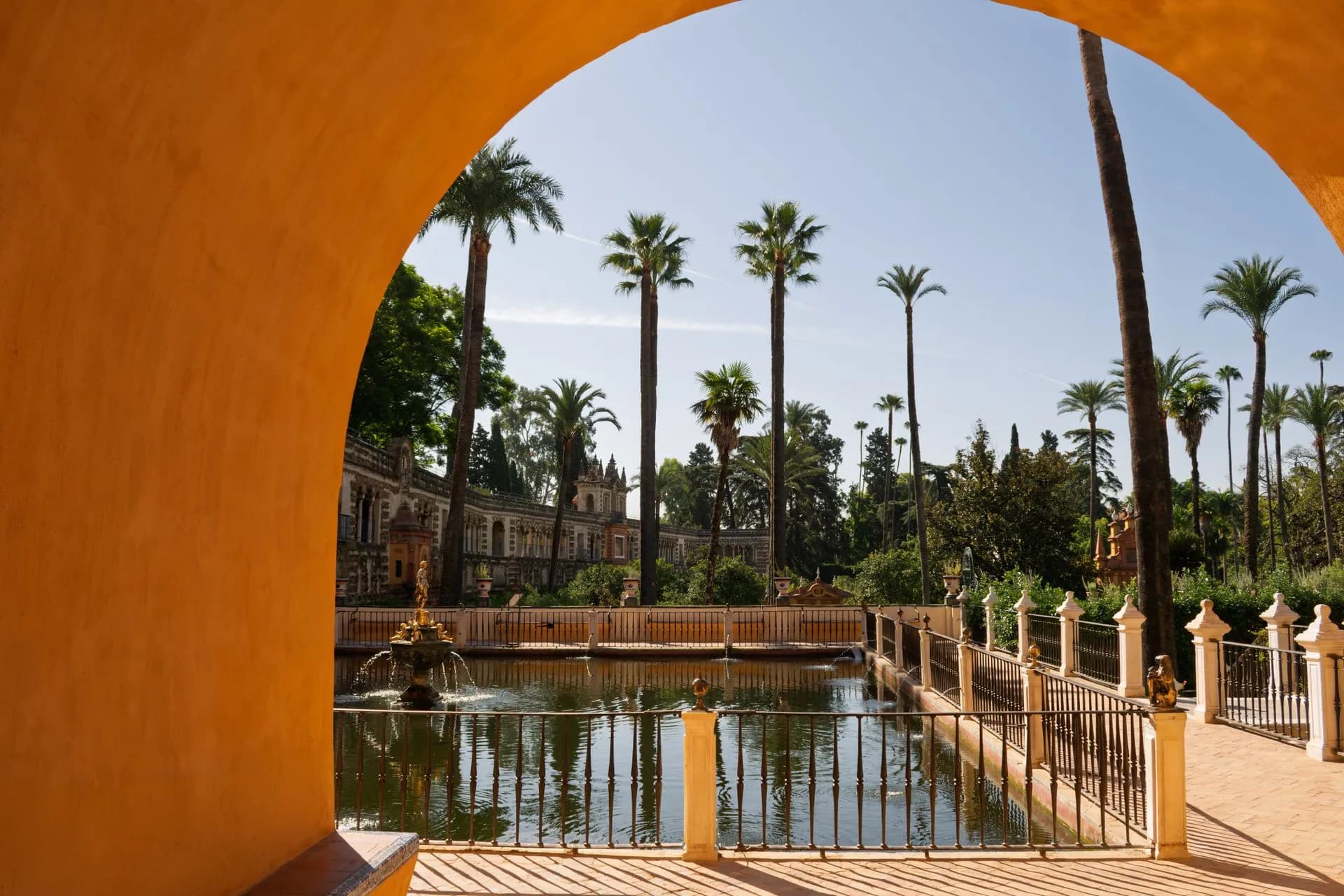
Cross the square to the Real Alcázar, a working royal palace of Mudéjar courtyards, tiled halls, and gardens. Give it at least 90 minutes; the gardens alone are worth the time. Pre-book so you walk straight in.
Lunch: tapas in Santa Cruz
Wander into the Barrio Santa Cruz, the old Jewish quarter of whitewashed lanes and hidden plazas right behind the Alcázar, and stop for tapas. This is the moment to slow down through the hottest part of the day.
Afternoon: Plaza de España
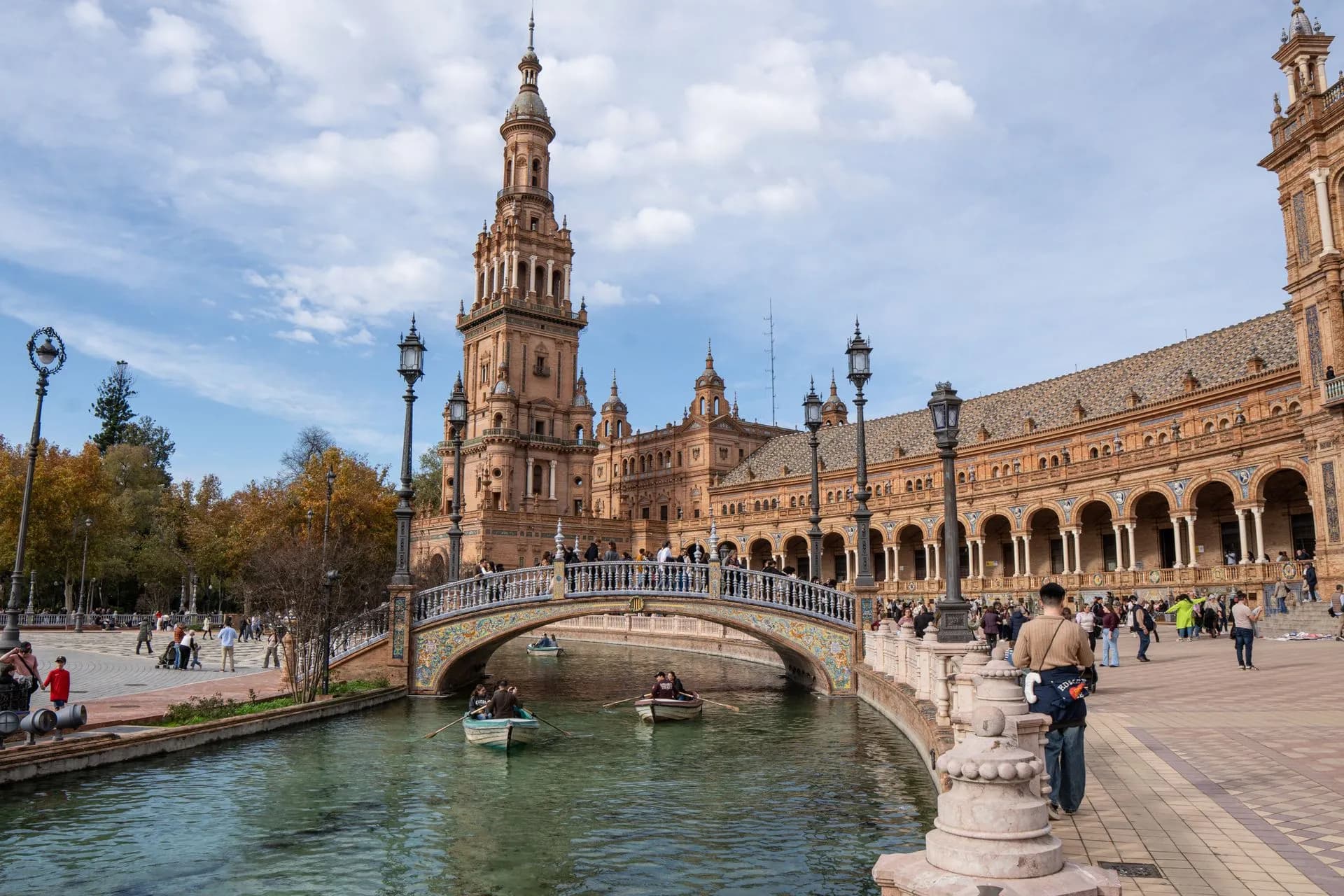
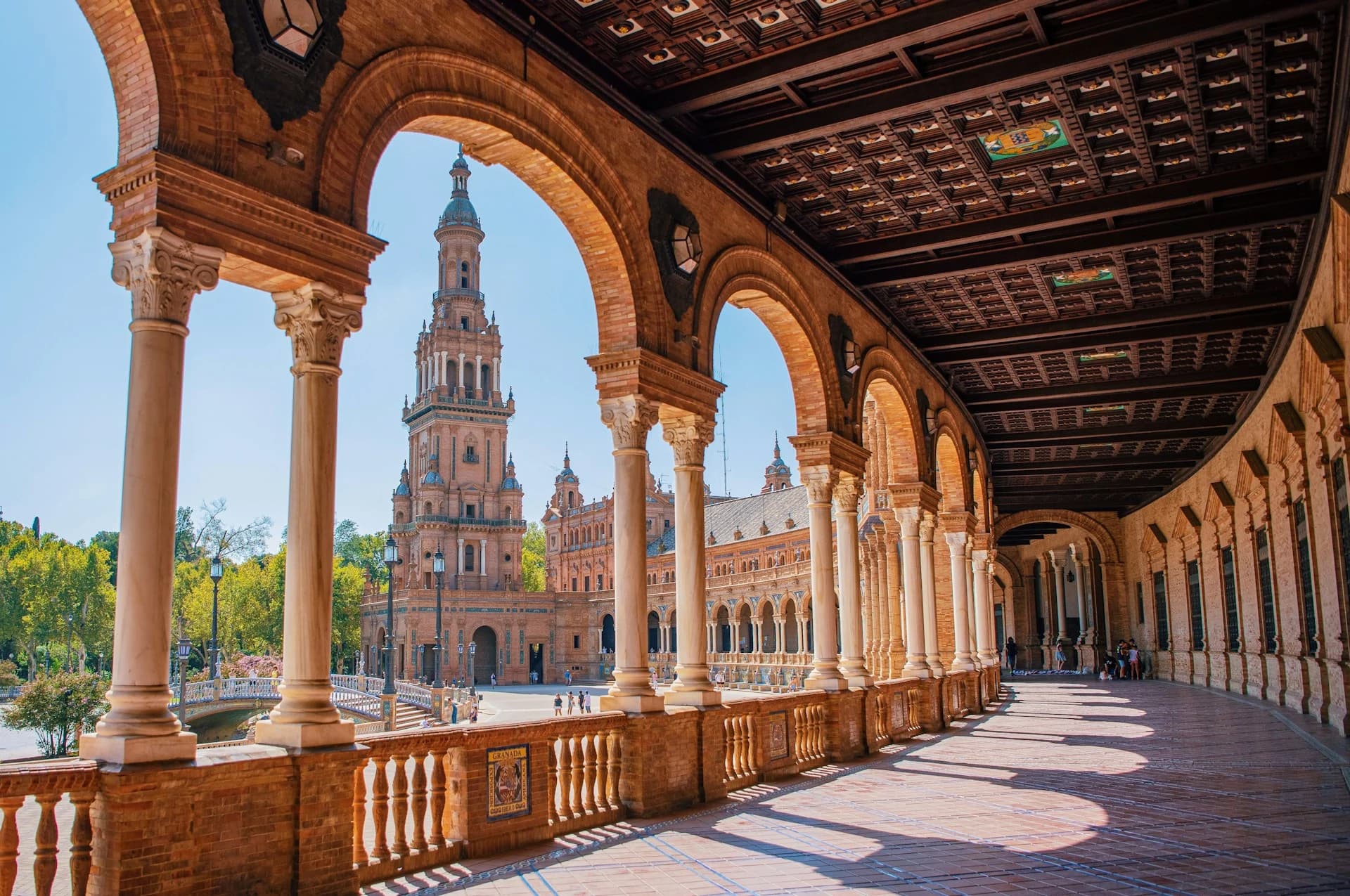
Walk south to the Plaza de España, the vast half-moon of brick, tile, and canals built for the 1929 exhibition, then cool off under the trees of the adjoining María Luisa Park.
Evening: tapas or flamenco
End with a tapas crawl or an intimate flamenco show, the art form that was born in this part of Andalusia. One day means choosing one; we would give the evening to flamenco if it is your first visit.
2-Day Seville Itinerary
A two day itinerary in Seville is the sweet spot for most visitors: enough to see the essentials without rushing, and to cross the river into the real local life of Triana. This is the classic weekend in Seville, a comfortable 48 hours in Seville, and the plan we would point most first-time visitors to when they ask what to do in Seville in 2 days.
Day 1: The old town
Run the one-day plan above at a calmer pace: Cathedral and Giralda first, the Real Alcázar late morning, tapas and a siesta through the heat, then Plaza de España and María Luisa Park in the late afternoon. Finish with an evening flamenco show.
Day 2 morning: Triana
Cross the Puente de Isabel II into Triana, the neighborhood famous for its ceramics, its market, and its flamenco roots. Browse the Mercado de Triana, walk Calle Betis along the water, and look back at the old town from the far bank.
Day 2 afternoon: the river and the north
Back on the main side, stroll past the Torre del Oro and consider a Guadalquivir river cruise for a different angle on the city. If bullfighting history interests you, the Maestranza bullring nearby runs guided visits.
Day 2 evening: Metropol Parasol
Head north to the Metropol Parasol, the giant timber structure locals call Las Setas ("the mushrooms"), and go up to the walkway for sunset over the city. The Alameda and Feria area around it is where Sevillanos go out, so it is a natural place for a late dinner.
3-Day Seville Itinerary
A 3 day Seville itinerary, a full 72 hours in Seville, gives you the whole city without hurry, plus room for one bigger choice on the final day: go deeper into Seville, or take a day trip. With 4 days in Seville you would simply keep this relaxed pace and add a second day trip.
Days 1 and 2
Follow the two-day plan above: the old town and an evening of flamenco on day one, then Triana, the river, and Metropol Parasol on day two.
Day 3, option A: slow Seville
Spend a third day on the things most visitors skip: the Casa de Pilatos, a grand Andalusian palace of courtyards and azulejo tile; a hands-on cooking class; or a deeper walking tour of the corners you have only passed through. This is also the day to revisit a favorite plaza with no agenda.
Day 3, option B: a day trip
Seville is a superb base for Andalusia. Córdoba and its Mezquita are about 45 minutes by fast train, Cádiz sits on the Atlantic about 90 minutes away, and Ronda's clifftop gorge is a classic longer excursion. See our full guide to day trips from Seville to choose. On a three-day trip we would only add a day trip if you have already booked your Alcázar and Cathedral slots for day one.
Adjusting Your Seville Itinerary by Season
The same itinerary feels different depending on when you go. How to adapt it:
Spring (March to May)
The best all-round time: warm days, long evenings, and orange blossom in the air. Everything in these plans works as written. Book further ahead, as this is peak season for the monuments.
Summer (June to August)
Brutal midday heat. Push the Cathedral and Alcázar to opening time, treat the early afternoon as a hard siesta, and shift the outdoor squares to the evening. See our guide to the best time to visit Seville for detail.
Autumn (September to October)
A near-twin of spring, with the heat easing off and thinner crowds after the summer peak. One of the most comfortable windows for walking the city.
Winter (November to February)
Mild, quiet, and cheap, with short queues at the big sights. Days are shorter, so front-load the outdoor stops and expect the odd rainy afternoon, but a winter itinerary is arguably the most relaxed of all.
Holy Week and Feria
Two dates reshape everything. During Semana Santa (Holy Week, the week before Easter) processions fill the center and normal routes and timings go out the window. Two weeks later, the Feria de Abril turns the city into a week-long fair. Both are spectacular but crowded and expensive, and a standard sightseeing itinerary does not run normally, so plan around the events themselves rather than the checklist above.
Where to Stay in Seville
For a short itinerary, stay central and walkable. The main neighborhoods:
- Santa Cruz: the atmospheric old quarter beside the Cathedral and Alcázar. Most central and photogenic, and the easiest base for a one or two-day trip, though it is the most touristy and its lanes can be noisy.
- El Arenal: between the Cathedral and the river, near the bullring. Central and slightly calmer than Santa Cruz, with easy access to the waterfront.
- Alfalfa and Encarnación: just north, around Metropol Parasol. More local, with the city's best tapas-crawl density and nightlife on your doorstep.
- Triana: across the river, authentic and residential. A little removed from the main sights but full of character, and a short walk or taxi from the center.
Wherever you land, aim for somewhere you can walk home to after a late dinner. Inside the center, that is nearly everywhere.
How Much a Seville Trip Costs
Seville is one of the better-value major cities in Western Europe, especially for food. Rough per-person daily guides, excluding flights:
| Style | Accommodation | Food and sights per day |
|---|---|---|
| Budget | €40–70 hostel or simple hotel | €30–50 |
| Mid-range | €90–150 hotel | €60–90 |
| Comfort | €180+ boutique or four-star | €100+ |
The two big monuments are inexpensive by European standards: entry to the Real Alcázar and to the Cathedral and Giralda each runs in the low teens of euros at the time of writing, and Plaza de España is free to wander. Tapas are the great value, often just a few euros a plate. Prices change, so confirm current ticket costs on the official sites when you book.
Common Seville Itinerary Mistakes
The errors we see most often, and how to avoid them:
- Not booking the Alcázar ahead. The single most common mistake. Same-day tickets are often gone by mid-morning in high season, and the walk-up queue is long and shadeless.
- Visiting Plaza de España at noon. It is a vast, open, unshaded space, so in summer that means blinding light and real heat. Go early or, better, in the late-afternoon golden hour.
- Trying to fit Córdoba into a two-day trip. A day trip on a two-day itinerary means you barely see Seville itself. Save day trips for three days or more.
- Renting a car. You do not need one, the center is largely pedestrian, and parking is a genuine headache. Trains handle day trips better anyway.
- Booking a hotel outside the center. The whole appeal of Seville is walking home through the old town after a late dinner. A cheaper hotel on the ring road quietly costs you the best part of the trip.
- Eating on a Northern-European clock. Turning up for dinner at 7 PM lands you in empty, tourist-facing restaurants. The good places fill up after 9 PM.
Tips for Your Seville Itinerary
- Book the Alcázar and Cathedral before you arrive. Timed slots sell out days ahead in high season, and walk-up queues in the heat are the avoidable low point of many trips.
- Start early, rest at midday. The first hour after opening is the coolest and quietest at every major sight. Save the exposed squares for the evening.
- Wear real walking shoes. The center is cobbled and you will walk more than you expect, even on a compact itinerary.
- Carry water and sun cover in summer. Shade is scarce on the big open plazas, and afternoons from June to August are genuinely hot.
- Plan dinner late. Kitchens fill up after 9 PM. Eating on a Northern-European schedule means empty, less characterful restaurants.
- Match the season to your plan. Spring and autumn are ideal; if you are traveling in the heat of summer, see our guide to the best time to visit Seville and lean harder on early starts and evenings.
Frequently Asked Questions
How many days do you need in Seville?+
Two full days is the sweet spot for most visitors, covering the Cathedral, the Real Alcázar, Santa Cruz, Plaza de España, Triana, and an evening of flamenco without rushing. Three days let you slow down or add a day trip. One day works only for the headline sights.
Is 2 days enough for Seville?+
Yes. A two-day Seville itinerary comfortably covers the old town and its two big monuments on day one, then Triana, the river, and Metropol Parasol on day two. You will not see everything, but you will see the essentials at a relaxed pace and still have time for tapas and flamenco.
Can you see Seville in one day?+
You can see the highlights in one day if you start early and pre-book. The Cathedral and the Real Alcázar sit next to each other, so a morning covers both, leaving the afternoon for Santa Cruz and Plaza de España and the evening for tapas or a flamenco show. It is tight, but the compact center makes it work.
What is the best order to visit the Alcázar and Cathedral?+
Do the Cathedral and Giralda first thing, then the Real Alcázar late morning, as they are a two-minute walk apart. Booking the earliest slots for both keeps you ahead of the crowds and out of the midday heat, and leaves the rest of the day free for the old town.
Do you need to book Seville attractions in advance?+
For the Real Alcázar and the Cathedral, yes. Both use timed entry and regularly sell out days ahead in spring and summer, and pre-booking lets you skip the ticket queue. Most other sights, plazas, and neighborhoods can be enjoyed spontaneously.
Is Seville walkable, or do you need a car?+
Seville is very walkable and you do not need a car. The historic center is largely pedestrian and the main sights cluster within a 20-minute walk, so most visitors walk everywhere, with the occasional cheap taxi, bike, or tuk-tuk for longer hops or hot afternoons. A car is only useful for day trips, and even those are easy by train.
What is the best time of year for a Seville itinerary?+
Spring (March to May) and autumn (September to October) are ideal, with warm days and manageable evenings. July and August are very hot, which reshapes any itinerary around early mornings and late evenings. See our guide to the best time to visit Seville for a month-by-month breakdown.
Can you do a day trip from Seville on a 3-day itinerary?+
Yes, and the third day is the natural slot for it. Córdoba is about 45 minutes by fast train, Cádiz around 90 minutes, and Ronda a classic longer excursion. Just make sure you have already used your first two days for the city itself, including the pre-booked Alcázar and Cathedral, before you spend a day away.
Affiliate note: Some links on this page are affiliate links. If you book through them, we may earn a small commission at no additional cost to you.