The best time to visit Seville comes down to one trade-off: the months with the most comfortable weather and the famous spring festivals are the busiest and priciest, while the cheapest, quietest months bring scorching summer heat or cooler, shorter winter days. Here is how to pick the right month for your trip.
What You Should Know
- For most travelers, the best all-around windows are roughly late September through October and the spring shoulders of March and May. You get mild, comfortable weather, manageable crowds, and prices well below the April festival peak.
- Seville's calendar runs on two extremes. The most comfortable weather and the famous spring festivals (Semana Santa and the Feria de Abril) cluster in April, which is also the busiest and most expensive month. The cheapest, quietest months are deep summer (July and August), when the heat is scorching.
- Two spring festivals can override everything else. Semana Santa (around late March into early April in 2026) and the Feria de Abril (around April 20 to 26) bring the city's biggest crowds and highest prices, so they are worth either planning around or planning a trip around.
- The price extremes are predictable: Semana Santa and Feria week are the most expensive; August is the cheapest month of the year but also one of the hottest, with many local businesses closed for the holidays. Summer heat peaks in July and August at 36°C and above.
Best Time to Visit Seville: The Short Answer
⭐ The short answer: Late September through October and the spring shoulders of March and May are the best all-around times to visit Seville. You get mild, comfortable weather and long-ish days without the peak crowds and prices of the April festivals or the furnace of July and August. For the festivals themselves, April is unbeatable; for the cheapest trip, August.
The best time to visit Seville depends on a single trade-off: the months with the most comfortable weather and the city's signature festivals (April) are also the busiest and most expensive, while the cheapest and quietest months (July, August) bring extreme heat. There is no month that is best at everything, so the right answer comes down to which factor matters most for your trip. This guide breaks down the weather, crowds, prices, and festival calendar month by month, then points you to a full guide for whichever month you land on.
If you want the simplest possible recommendation: we'd lean toward the shoulder seasons on either side of the heat. Autumn, roughly late September into October, and spring, March and the first three weeks of May, deliver warm, comfortable conditions at well below the April festival peak, with crowds a fraction of Feria week. If your dates are fixed by school holidays or you are coming for Semana Santa or the Feria, the month-by-month table below tells you exactly what to expect and how to plan around it.
One thing to settle up front: every month is genuinely visitable. Seville does not have a season that "shuts down," though parts of the city do close for the August holidays. Even August, the hottest and quietest month on paper, rewards travelers who plan around the heat with rock-bottom prices and near-empty monuments. The job of this guide is to help you match the month to your priorities, not to talk you out of any of them.
What Is the Best Month to Visit Seville?
If we had to pick one month, October is the best month to visit Seville. It combines mild, comfortable weather (around 26°C), all-day sightseeing conditions, prices below the spring peak, and the year's best day-trip weather for Córdoba and Ronda. No other month lands all of that at once. May is the close runner-up: the weather is warm and the evenings are the longest of the year, but prices sit higher and the late-spring high season is busier.
Scoring every month on weather, crowds, price, and overall comfort together, the clear top tier is October (9.5/10), followed by May (9/10) and March (8.5/10). The weakest months are August (5/10) and July (5.5/10), dragged down by extreme heat despite being the cheapest. The takeaway behind every "best month in Seville" question is the same: autumn and the spring shoulders give you near-ideal conditions without the April festival cost and crowds.
That said, the best month for you can differ from the best month overall. If your trip is built around Semana Santa or the Feria de Abril, April outranks everything else regardless of its crowds and prices. If price is the only thing that matters, August wins despite sitting last. In 2026, flamenco lovers have a special reason to choose September, when the Bienal de Flamenco takes over the city. The ratings below assume an average traveler weighting weather, crowds, and price evenly.
Best Months vs Most Challenging Months
If you only remember one thing from this guide, make it this. Three months stand out as the easiest, most comfortable times to visit, and two are the hardest to enjoy without planning around them.
The two challenging months are not off-limits, just the cheapest in exchange for the most planning. April sits in its own category: the weather is excellent, but Semana Santa and the Feria de Abril make it the busiest and priciest month, so it is best either timed deliberately or sidestepped for the calmer shoulders.
Seville's Seasons: From Festival Spring to Furnace Summer
Everything about timing a Seville trip flows from its strong seasons: a festival-packed, perfect-weather spring; a scorching, empty summer; an underrated, comfortable autumn; and a mild, quiet, festive winter. Understanding the four is most of the decision.
Spring (March to May) is the postcard version of Seville: warm days climbing from the low 20s to the high 20s°C, orange blossom in the streets, and the city's two greatest festivals, Semana Santa and the Feria de Abril, both falling around April. The cost is demand. Holy Week and Feria week are the most crowded and expensive of the entire year, with hotel prices roughly doubling. The shoulders, early-to-mid March and the back half of May, deliver the same lovely weather with far less of the crush.
Summer (June to August) is hot to scorching, with July and August averaging 36°C and heatwaves past 40°C. In exchange you get the lowest prices of the year, the thinnest crowds, the longest evenings, and a vibrant night culture of rooftop bars and open-air Alcázar concerts. August adds a twist: much of local Seville closes for the holidays. From what we've seen, the trade is worth it for budget travelers and night owls who plan around the midday heat; for those who want to sightsee all day, it is not. Our full Seville in summer guide covers the heat, the night culture, and the August closures in detail.
Autumn (September to November) is the underrated sweet spot. September starts hot and eases; October is mild and comfortable, arguably the best all-round month; November turns cooler and quieter as prices fall back toward the winter low. It is the ideal stretch for all-day sightseeing and day trips, and in even-numbered years like 2026, September brings the Bienal de Flamenco.
Winter (December to February) is mild by European standards but cool and, in December, the wettest month. It brings the lowest prices and thinnest crowds of the year, apart from the Christmas and New Year bump, plus festive Christmas lights and nativity scenes in December. It is the season for calm, value, and the monuments largely to yourself.
| Season | Months | Weather | Crowds & Prices | Best For |
|---|---|---|---|---|
| Spring | Mar–May | Warm, orange blossom; excellent in April | Highest at Semana Santa & Feria (April) | Festivals, atmosphere, day trips |
| Summer | Jun–Aug | Hot to scorching (36°C+ in Jul–Aug) | Lowest; quietest; Aug closures | Budget trips, long nights, Alcázar concerts |
| Autumn | Sep–Nov | Hot easing to mild; ideal in October | High in Sep–Oct, easing in Nov | Sightseeing, day trips, the Bienal (Sep) |
| Winter | Dec–Feb | Mild but cool; wettest in December | Lowest, apart from Christmas/NYE | Value, calm, Christmas (December) |
Seville Weather by Month: Temperature & Rain Chart
Here is the Seville climate at a glance: average daytime highs across the year, plus how much rain to expect each month. The shape tells the whole story, a long, hot summer plateau in July and August, comfortable shoulders in spring and autumn, and a mild, wetter winter.
| Month | Avg High | Avg Low | Rain |
|---|---|---|---|
| January | 16°C (61°F) | 6°C (43°F) | High |
| February | 18°C (64°F) | 7°C (45°F) | Moderate |
| March | 21°C (70°F) | 9°C (48°F) | Moderate |
| April | 24°C (75°F) | 11°C (52°F) | Moderate |
| May | 28°C (82°F) | 13°C (55°F) | Low |
| June | 33°C (91°F) | 17°C (63°F) | Very low |
| July | 36°C (97°F) | 19°C (66°F) | None |
| August | 36°C (97°F) | 20°C (68°F) | Very low |
| September | 32°C (90°F) | 17°C (63°F) | Low |
| October | 26°C (79°F) | 14°C (57°F) | Moderate |
| November | 20°C (68°F) | 10°C (50°F) | High |
| December | 17°C (63°F) | 7°C (45°F) | Highest |
The numbers explain the whole timing question. From June through September the daytime high sits at or above 32°C, which is why summer trades comfort for low prices. Rain is effectively a non-issue from May to September and a real factor from October through January, peaking in December. The most comfortable months, where warm-but-not-hot weather meets little rain, are April, May, and October.
When to Visit Seville, by What Matters Most
There is no single best month, only the best month for your priority. Find the row that matches what you care about most, then check that month's full guide for the detail.
| If your priority is… | Best window | Why |
|---|---|---|
| The best weather | October & May | Mild, comfortable all-day conditions. April is excellent too, but it is the festival peak. |
| The lowest prices | August, then July | August has the year's cheapest hotels; July is close behind in the deep-summer low. |
| Fewest crowds | July, August, January | Summer heat and the winter low keep numbers down. August is quietest, though many locals are away. |
| Semana Santa & the Feria de Abril | Late March – April | The city's two biggest festivals, with the most atmosphere of the year. Book months ahead. |
| The Bienal de Flamenco | September (even years) | The world's foremost flamenco festival takes over Seville every even-numbered year, including 2026. |
| Day trips (Córdoba, Ronda) | October, March–May | Mild weather makes the inland towns a pleasure rather than a battle with the heat. |
| Best value (conditions vs cost) | Late Sept, November, early March | Comfortable shoulder-season weather at well below the April festival prices. |
| Long evenings & nightlife | May – July | The longest days of the year, warm nights, rooftop bars, and the Alcázar garden concerts. |
Our pick for most first-time visitors who are not chasing the festivals is the October stretch or the March and May shoulders. All three sit just outside peak pricing, all deliver warm or mild weather, and all avoid both the April festival crush and the deep-summer heat. What matters more than the exact month is dodging the two big spikes: shift a trip a week or two off Semana Santa or the Feria and you get nearly the same spring weather at a fraction of the cost. If you are coming for the festivals themselves, build the trip around April and accept the crowds and prices as the price of admission.
Seville Month by Month: At a Glance
Here is the whole year in one view, with our overall score for each month. Each month links to a full guide with detailed weather, what to book, and what to expect.
| Month | Overall | Weather | Crowds | Prices | Headline |
|---|---|---|---|---|---|
| January | 7.5/10 | Mild, 16°C; short days, some rain | Very low | Lowest | Cheapest and calmest; Three Kings parade |
| February | 8/10 | Mild, 18°C; drier than January | Very low | Low | Last of the quiet low season; Cádiz Carnival nearby |
| March | 8.5/10 | Warm, 21°C; orange blossom | Medium, surges late | Rising | Spring shoulder; Semana Santa begins late month |
| April | 8/10 | Excellent, 24°C | Very high | Highest | Feria de Abril & Semana Santa; book far ahead |
| May | 9/10 | Warm, 28°C; longest evenings | High, easing | High | Post-Feria sweet spot; terrace season |
| June | 7/10 | Hot, 33°C | Medium | Moderate | Summer value begins; Alcázar night concerts |
| July | 5.5/10 | Scorching, 36°C | Low | Low | Peak heat; cheap and empty; plan around the sun |
| August | 5/10 | Scorching, 36°C | Low | Lowest | Hottest, cheapest; much of the city on holiday |
| September | 8/10 | Hot easing, 32°C | Medium | High | City reopens; Bienal de Flamenco in 2026 |
| October | 9.5/10 | Mild, 26°C; ideal | Medium-high | High | Best all-round month; perfect for day trips |
| November | 8/10 | Mild, 20°C; wetter | Low | Moderate | Quiet, cozy, and back to good value |
| December | 7.5/10 | Cool, 17°C; wettest | Medium | Moderate, peaks late | Christmas lights and nativity scenes; festive |
ℹ️ Overall scores are our editorial summary, weighing weather, crowds, and prices together. They reflect the average traveler's priorities; if one factor matters most to you (the festivals, lowest price, fewest crowds), use the priority table above instead.
For the full seasonal picture and the city's headline experiences, see our guide to the best things to do in Seville, which covers the monuments, flamenco, tapas, and day trips that anchor a trip in any month. For a day-by-day plan, see our Seville itinerary, and for the cooler shoulder our autumn in Seville guide.
When to Visit Seville for Your Trip Type
The right month also depends on who is travelling and what they want out of the trip.
Couples
We'd give October, May, and February the edge for a couples trip. October and May pair warm, comfortable weather with long, romantic evenings on the terraces and the river, while February brings quiet, low-priced streets and Valentine's. All three sidestep both the Feria crowds and the deep-summer heat. A golden-hour river cruise is at its best in the warm, long evenings of May.
Families
School calendars usually decide this for you. If you have flexibility, we'd shortlist October and the spring shoulders: October gives mild, all-day weather for sightseeing and easy day trips, while late March or May pairs warm spring weather with the build-up to the festivals. December is a strong family month too, with the Christmas lights, markets, and nativity scenes pure magic for children. Summer families get the most from the heat by leaning on early starts, pools, and the cool of the evening.
Budget travelers
August is the cheapest month outright, with July close behind. Hotel rates in these months run well below the spring peak, often around €85 to €100 a night for a central four-star. The trade is extreme heat and, in August, a wave of local closures, so a morning-and-night rhythm and a flexible plan around open restaurants help. November and the back half of January are the value picks for travelers who want low prices without the furnace, pairing cheap rooms with mild, if cooler, weather.
Culture and first-timers
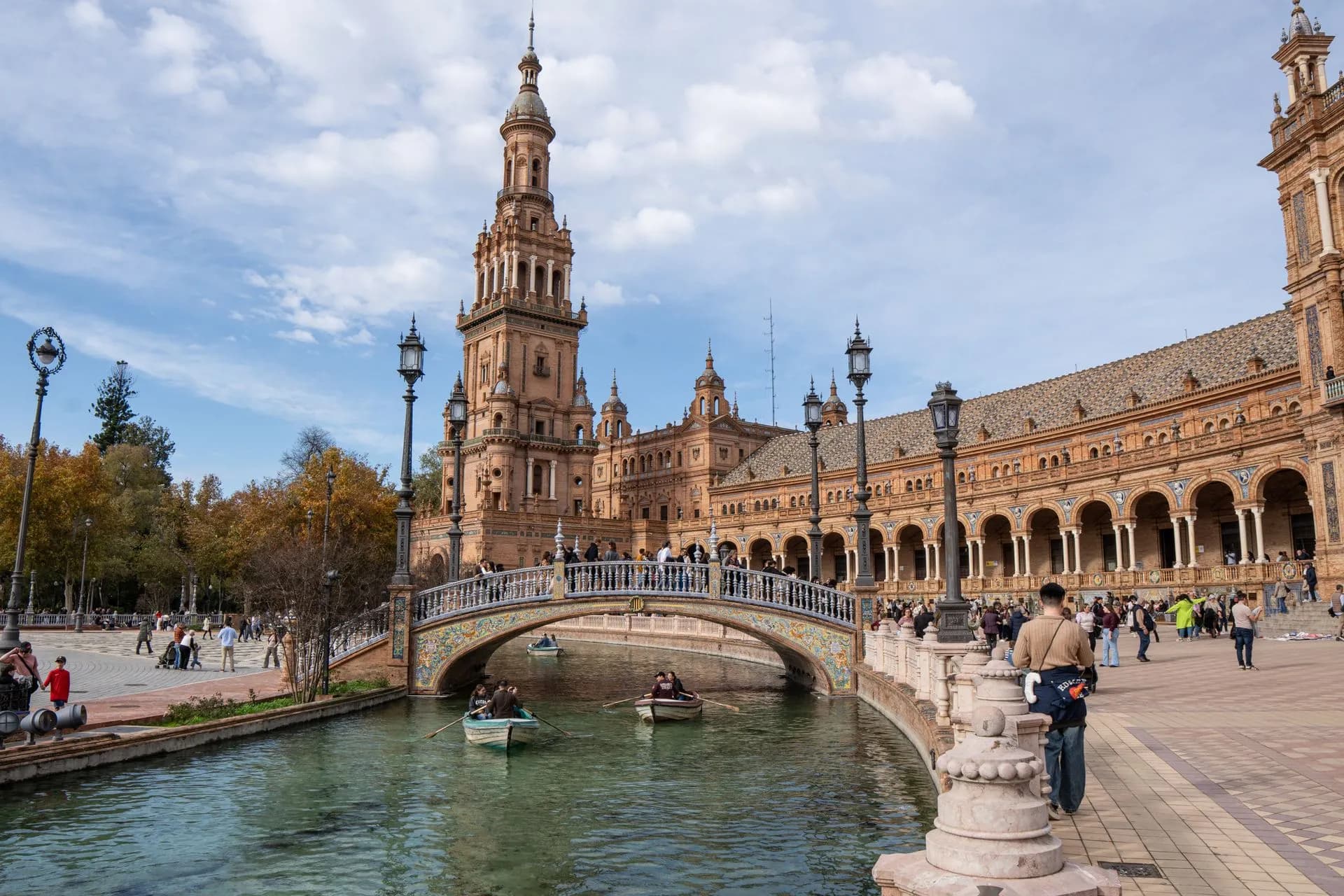
For a first, sightseeing-led trip, October or the March shoulder is what we'd choose: comfortable weather lets you see the Royal Alcázar, the Cathedral and Giralda, and Plaza de España at your own pace rather than the sun's. For living tradition, time the trip to Semana Santa or the Feria in April, and for world-class flamenco, the Bienal in September of an even year like 2026.
Seville by Activity: The Best Months to Go
If your trip is built around one thing in particular, the calendar shifts. Here is the best window for the activities people most often plan a Seville trip around.
| Activity | Best Months | Why |
|---|---|---|
| Sightseeing & monuments | Oct, Mar–Apr, Nov | Mild, all-day weather for the Alcázar, Cathedral, and Giralda without the heat. |
| Day trips (Córdoba, Ronda) | October, March–May | The inland towns are a pleasure in mild weather and brutal in the summer heat. |
| Flamenco | September (Bienal); year-round | The Bienal de Flamenco fills the city in even years; intimate tablaos run all year. |
| Semana Santa processions | Late March – early April | Holy Week is one of Spain's most powerful religious festivals. |
| Feria de Abril | ~April 20–26 | The city's exuberant spring fair, two weeks after Easter. |
| Tapas & terraces | May, Sept–Oct | Warm but not scorching evenings are peak terrace season. |
| River cruise & rooftops | May–September | Warm nights and late sunsets make the golden-hour river and rooftops shine. |
| Christmas lights & Belenes | December | The alumbrado navideño and nativity scenes make December the festive month. |
One note for festival planning: the Feria de Abril largely happens inside private casetas, the decorated marquees, so without a local invitation you focus on the public casetas, the daytime horse-and-carriage parade, and the funfair. Knowing that in advance is the difference between a magical Feria and a confusing one. Our April guide covers it in full.
Seville vs Granada vs Córdoba: Weather Compared
If you are building an Andalusian trip and weighing Seville against its neighbors, the broad timing advice is the same, spring and autumn are best, midsummer is harsh, but the details differ. Córdoba, an hour away, is even hotter; Granada, higher and more continental, runs cooler with colder winter nights.
| City | Summer high (Jul–Aug) | Winter (Jan day / night) | Rain | Best months | In a nutshell |
|---|---|---|---|---|---|
| Seville | ~36°C | 16°C / 6°C | Dry summers, wet Nov–Dec | Mar–May, Oct | Hottest major city; the festival capital |
| Córdoba | ~37°C (often Spain's hottest) | 15°C / 4°C | Similar to Seville | Mar–May, Oct | Even hotter in summer; home of the Mezquita |
| Granada | ~34°C, cooler nights | 12°C / 1°C | Drier; colder snaps | Apr–Jun, Sep–Oct | Higher and more continental; the Alhambra, ski season nearby |
The practical takeaways: Córdoba is the one to keep out of midsummer if you can, since its July and August afternoons are the most punishing in the region, so visit the Mezquita in spring or autumn. Granada's altitude makes it the most comfortable of the three in high summer and the coldest in winter, with genuinely chilly nights and the Sierra Nevada ski season within reach from December. Seville sits in the middle: reliably hot in summer, mild in winter, and unmatched for spring festivals. All three share the same sweet-spot months, so an October or April trip works beautifully across the whole triangle. Our Seville day trips guide covers Córdoba and Ronda in detail for travelers basing themselves in Seville.
When to Avoid Seville (and How to Work Around It)
No month is off-limits, but a few periods carry real downsides worth planning around.
- Semana Santa & the Feria de Abril (late March–April): the busiest and priciest stretch of the year, with packed centers, closed-off streets for the processions, and hotel prices that roughly double. If you want quiet, avoid these weeks entirely. If you are coming for the spectacle, book months ahead; if you want spring weather without the crush, target the mid-April lull between the two festivals.
- Christmas and New Year: hotel rates rise and some shops, restaurants, and attractions close on December 25 and January 1. Early December, by contrast, is one of the best-value festive weeks with the lights and nativity scenes already up. Shifting a holiday trip earlier in the month saves significantly.
- Peak heat (July–August): afternoons hit 36°C and above, and August adds a wave of local closures for the holidays. Work around it by adopting the local rhythm: sightsee at dawn, rest indoors or by a pool through the 2 to 7 PM peak, and head out in the long evening. A day trip to the Cádiz coast for the sea breeze is the classic escape. Most people don't realize how much the time of day matters in summer; the same monument is a pleasure at 9 AM and a punishment at 3 PM, which is why your daily schedule matters more here than your exact travel dates.
The pattern is consistent: the downside periods all have a workaround, whether it is a one-week shift in dates, an early-December trip, or a morning-and-night summer rhythm. None of them are reasons to write off a trip, only factors to plan around.
From Our Experience
What we consistently see is that travelers who target the shoulder seasons just outside the April festivals, the autumn stretch of late September into October and the spring shoulders of March and May, come away happiest. They get weather almost as good as the spring peak at a fraction of the price and crowds, which is the closest thing Seville has to a free upgrade.
Tips for Timing Your Seville Trip
- Book the festivals early, low season late: Semana Santa and the Feria de Abril sell out months ahead, and rooms then roughly double in price. Summer and winter trips can be booked much closer to arrival with plenty of availability.
- Decide on the festivals first: if Semana Santa or the Feria is the reason you are coming, build the trip around April and reserve everything well ahead. If you want spring weather without the crush, the mid-April lull or the March and May shoulders are the play.
- Use autumn for the best value-to-weather ratio: late September into October delivers mild, all-day weather at below-peak prices, and it is the best stretch of the year for day trips to Córdoba and Ronda.
- Plan summer around the heat, not against it: in July and August, do the monuments at opening, rest at midday, and live in the long evening. The Alcázar night concerts and a Cádiz beach day are the summer highlights.
- Mind the August closures: many family-run bars and restaurants shut for two to four weeks around the August 15 holiday, so check that your chosen spots are open before building a day around them.
- Remember the clock changes: Spain springs forward in late March and falls back on the last Sunday of October, which shifts how late the long spring and summer evenings run.
- Still deciding on a month? Read the detail. Our month-by-month guides for October, April, May, and August cover the standout months for weather, festivals, value, and crowds in full.
How We Put This Guide Together
The Spain Travel Insider team built this guide from historical weather records, the city's festival and event calendar, and the seasonal pricing and availability patterns we track across central four-star hotels and the destination's activities. Timing is the most condition-dependent travel decision in Seville, where the gap between a comfortable October day and a 40°C August afternoon is enormous, so we prioritized documented patterns over best-case framing. This guide was reviewed and updated in June 2026. Festival dates shift year to year with the Easter calendar, and seasonal conditions vary, so we recommend confirming Semana Santa and Feria dates and checking the forecast in the weeks before your trip. Every month linked here has its own dedicated guide with detailed weather and booking advice.
Frequently Asked Questions
When is the best time of year to visit Seville?+
For the best balance of weather, crowds, and price, visit late September into October or the spring shoulders of March and May. These windows deliver mild, comfortable weather without the peak crowds and prices of the April festivals or the extreme heat of July and August. If your priority is the festivals, April is best; if it is the lowest possible price, August.
What is the best month to visit Seville?+
October is the best single month to visit Seville. It combines mild 26°C weather, all-day sightseeing conditions, prices below the spring peak, and the year's best day-trip weather, which no other month manages all at once. May is the close runner-up with warm weather and the longest evenings of the year, but higher prices. The best month for you can differ: April for the festivals, August for the lowest price.
What is the cheapest month to visit Seville?+
August is the cheapest month, with central four-star hotels around €85 a night, followed closely by July. These deep-summer months run well below the spring peak. The trade-off is extreme heat of 36°C and above, and in August a wave of local closures for the holidays, so a morning-and-night rhythm and a flexible plan around open restaurants are worth having.
What is the hottest month in Seville?+
July and August are the hottest months, both averaging highs around 36°C with heatwaves that can push past 40°C. Seville is one of the hottest cities in Europe in summer. The heat is very manageable if you sightsee in the morning and evening and rest at midday, but it makes all-day touring impractical. May, June, September, and October are far more comfortable.
When is Semana Santa and the Feria de Abril in 2026?+
In 2026, Semana Santa (Holy Week) begins on Palm Sunday, March 29, and runs through Easter Sunday, April 5. The Feria de Abril follows about two weeks later, around April 20 to 26. Both are the busiest and most expensive periods of the year, with hotel prices roughly doubling and rooms selling out months ahead, so plan early if your trip overlaps either.
When is the least crowded time to visit Seville?+
The quietest months are July, August, and January. Summer heat thins the crowds in July and August, with August the emptiest as locals head to the coast, while January is the calm, low-priced heart of winter. The busiest periods to avoid for crowds are Semana Santa and the Feria de Abril in April.
What is the best month for good weather in Seville?+
October and May offer the most comfortable weather: mild to warm days, long evenings, and conditions that suit all-day sightseeing. April is excellent too, around 24°C, but it is the festival peak with the highest crowds and prices. March and November are close behind, cooler but still pleasant. The summer months are reliably sunny but often too hot for midday touring.
Is the Bienal de Flamenco in 2026?+
Yes. The Bienal de Flamenco is held in Seville every even-numbered year, so 2026 is a Bienal year. Running for roughly a month from early September, it is the most important flamenco festival in the world, with leading artists performing across the city's theaters and tablaos. If flamenco is a priority and your dates are flexible, September 2026 is the month to choose.
Affiliate note: Some links on this page are affiliate links. If you book through them, we may earn a small commission at no additional cost to you.