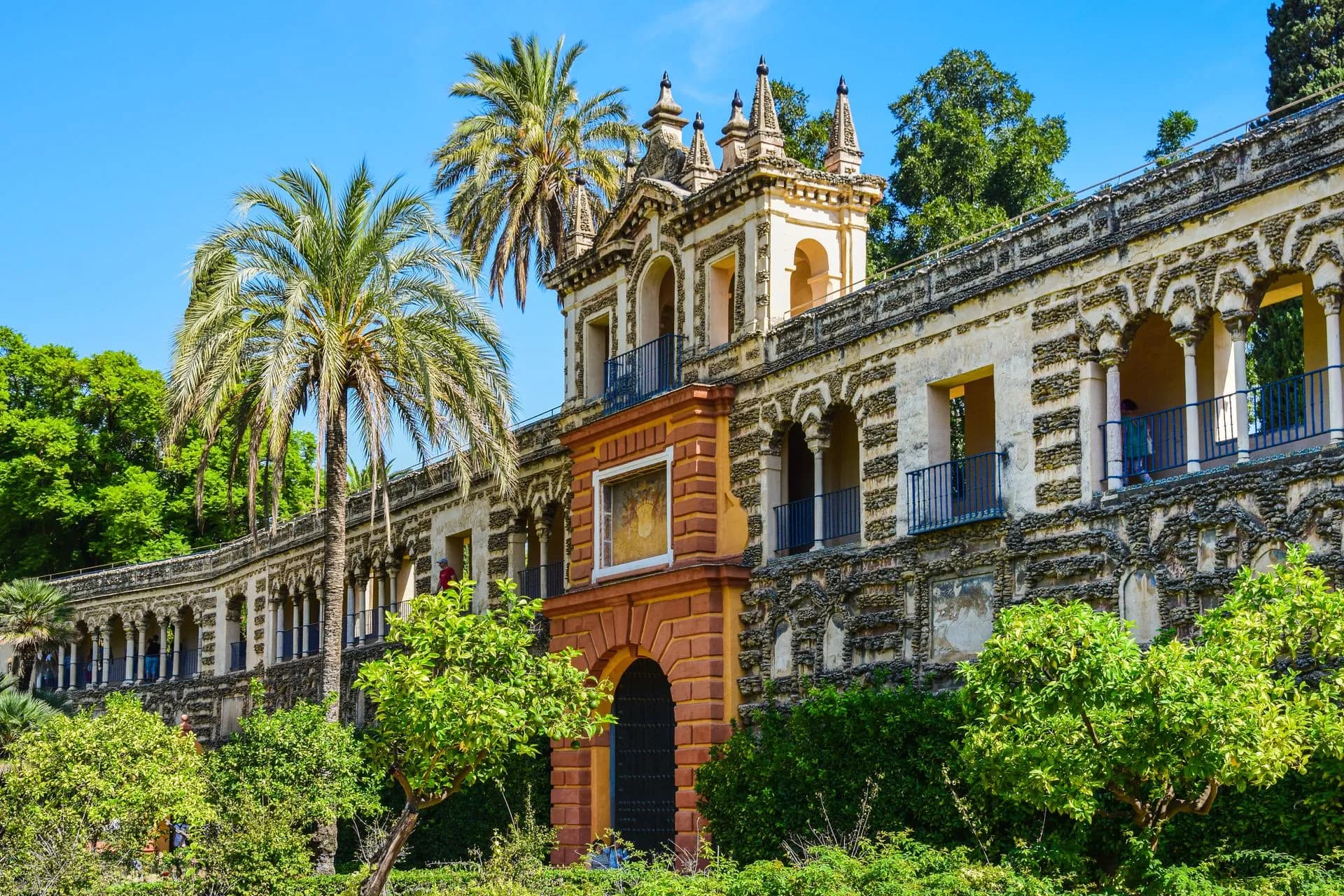
Fall is arguably the best season to visit Seville: the brutal summer heat breaks into mild, all-day sightseeing weather, the city returns to full life, and the Bienal de Flamenco lands in September. Here is what to actually expect across September, October, and November, and how to plan around the shortening days and first rains.
What You Should Know
- Fall (September through November) is the great cool-down. Highs slide from a still-summery 32°C in September to a mild 26°C in October and a cool 20°C in November, and the punishing midday heat that shapes a summer trip simply lifts. October in particular delivers some of the most comfortable all-day sightseeing weather of the entire year.
- The city returns to full life. The bars and restaurants that shut for the August holidays reopen in September, the terraces fill, and the cultural calendar restarts. In even-numbered years, including 2026, the Bienal de Flamenco, the world's foremost flamenco festival, takes over the city in September.
- Prices follow a tale of two halves. September and October are firmly in autumn high season (central four-star hotels around €140 a night), driven by the comfortable weather and returning tourism, while November falls back toward the winter low, around €95 a night, with thin crowds.
- The dry summer ends and the days shorten. October brings the first real autumn rain (around six wet days), November is one of the wetter months, and the clocks fall back on October 25, pulling sunset to roughly 6:30 PM and then 6:00 PM. Evenings get dark and cozy fast.
Seville in Fall: The Honest Picture
⭐ October is the best month to visit Seville. You get mild weather, full-day sightseeing, lively evenings, and fewer crowds than spring. If you are deciding between September, October, and November, here is exactly what to expect from each.
Autumn in Seville is, for most travelers, the strongest season of all. Fall trades the brutal summer heat for mild, usable days while keeping the long, lively evenings, so you get the whole city back: morning monuments, afternoon walks, day trips, and late dinners, all comfortable. The one real trade is that the season changes underneath you, from a hot September to a cool, dark November, so the month you choose matters more than in any other season.
| If you want… | Visit |
|---|---|
| Best weather | October |
| Lowest prices | November |
| Flamenco festival (Bienal) | September (even years) |
| Fewest crowds | November |
| Best overall | October |
Visiting Seville in fall means catching the city at its most balanced. The brutal 36°C summer afternoons give way to weather you can actually plan a full day around, the August closures are over, and the cultural calendar is at its richest. September still carries a summer tail and, in even years, the Bienal de Flamenco. October is the sweet spot of mild all-day comfort. November is cooler, wetter, and quieter, but the cheapest and calmest of the three. None of these months is a wrong choice; they are simply different trips.
In our view, fall is the season we would point most first-time visitors toward, provided they pick the month to match their priorities. If you want the best weather, come in October. If you want flamenco at its peak and a city buzzing back to life, come in September. If you want value and calm and do not mind a cool, rainy edge, come in November. This guide covers all of it: what the fall weather in Seville is really like month by month, the cultural draws that make autumn special, the complete list of activities and when each one shines, the shortening days and first rains to plan around, and whether Seville is cheaper in fall.
The Real Reason to Visit in Fall: The City Comes Back
The strongest argument for fall is not a single attraction; it is that you get the entire city back. Summer pushes everything into the cool of the evening and shuts much of local Seville in August. Fall reverses both: the weather becomes usable all day, the shuttered bars and restaurants reopen, and the full cultural calendar restarts. From September onward the terraces fill at lunchtime as well as midnight, and the day stops being something to survive.
The headline cultural event is the Bienal de Flamenco, held in Seville every even-numbered September, including 2026. It is the world's foremost flamenco festival, with performances spread across the city's theaters, tablaos, and historic courtyards for several weeks. If your trip falls in a Bienal September, it is worth building an evening or two around it. Year-round, the intimate flamenco tablaos of Santa Cruz and Triana are at their best now too, no longer competing with a sweltering night.
What changes most is that the daytime opens back up. The Royal Alcázar gardens, brutal at midday in July, are a pleasure to linger in through an October morning. The day trips that summer rules out, above all the Mezquita at Córdoba, become comfortable again. A Guadalquivir cruise works at golden hour or midday, and the walking tours that were a 6 AM-or-nothing proposition in summer can be enjoyed at a civilized hour. The famous evenings are still here, just shorter as the season goes on; what fall adds is the daytime.
Late fall has its own quieter highlights. All Saints' Day on November 1 is a national holiday with a distinct local rhythm, and the SICAB Spanish horse show fills the fairground in mid-November. Autumn is also when Seville's gastronomy turns cozy, with game, stews, and the new season's produce appearing on menus. The crowds are thinner and the city feels more like itself than at any point in the peak.
Seville Weather in Fall: September, October, and November
The Cool-Down: Fall Weather in Seville Month by Month
Fall weather in Seville is defined by a steady, dramatic descent in temperature. September opens hot, around 32°C and still summery, before easing into genuinely pleasant warm-autumn weather by its final week. October settles into mild 26°C afternoons with cooler evenings, the most comfortable all-day conditions of the year. November cools further to around 20°C by day and a chilly 10°C after dark. The single most useful thing to grasp is that fall is not one climate but three, so a September trip and a November trip call for different packing and a different daily rhythm.
So is Seville warm in October? Yes, comfortably so. We found October afternoons mild enough to explore Plaza de España and the María Luisa Park for hours without seeking shade, the kind of unhurried daytime that the summer heat makes impossible. By early November the gap between day and night is what catches people out: pleasant in a shirt at midday, but we needed a jacket within an hour of sunset. Pack a light layer for the evening from late October on.
Rain in Seville in Fall: Does It Rain in November?
The bone-dry summer is over. September stays mostly dry with the occasional shower, but October brings the first real autumn rain, averaging around six wet days, usually as short showers between sunny spells. November is one of the wetter months of the year, with rain more frequent and more persistent, so yes, it does rain in Seville in November, though rarely all day. None of this washes out a trip. From our experience the first autumn rains tend to pass quickly, so do not cancel an outdoor plan at the first dark cloud; wait twenty minutes over a coffee and the sun is often back. From October, pack a compact umbrella and keep a flexible indoor option ready for the heavier afternoons.
Shortening Days
The other big shift is daylight. Early September still has long, late evenings with sunset near 8:15 PM, but the clocks fall back on October 25, dropping sunset to around 6:30 PM and then near 6:00 PM in November. By late fall the evenings are genuinely dark and made for indoor culture: flamenco, dinner, museums. Front-load outdoor sightseeing into the daylight hours, which get noticeably shorter as the season runs on.
| Month | Avg High | Rain Risk | Crowds | Prices | Best For |
|---|---|---|---|---|---|
| September | 32°C | Low | Medium | High | Flamenco and reopening; Bienal in even years |
| October | 26°C | Moderate | Medium-High | High (easing late) | Best overall; mild all-day weather and day trips |
| November | 20°C | Higher | Low | Lowest | Value and calm; cozy autumn culture |
If your dates are flexible, October is the sweet spot: mild from morning to night, ideal for the outdoor sights and day trips, with autumn crowds that thin a little late in the month. September is the pick for flamenco and a city buzzing back to life, especially in a Bienal year. November is the cheapest and quietest, the right call for value and calm if you do not mind cooler, wetter, shorter days. For the shoulder months on either side, our Seville in September guide and Seville in November guide go deeper.
September, October & November at a Glance
The three fall months are not interchangeable; they span the biggest weather swing of any Seville season. Here is how they compare on heat, crowds, and what each one is best for, in one quick view.
Planning Around Fall's Shifts: Shorter Days and the First Rains
Two fall realities deserve a real plan rather than a hopeful shrug: the shortening daylight and the return of rain. Neither is a reason to skip a trip, but both reshape how you spend your time, especially from mid-October onward, and knowing them in advance is the difference between a smooth autumn trip and a frustrating one.
The Shortening Days
The clocks fall back on October 25, and the loss of daylight is sharper than most visitors expect. Early September still has late, golden evenings with sunset near 8:15 PM, but by November the sun is down around 6:00 PM. The fix is simple: front-load your outdoor sightseeing into the day, which is now comfortable all the way through, rather than saving it for an evening that arrives early and dark. Save flamenco, dinner, and museums for the night, when there is little daylight to waste anyway.
The First Rains and Changeable Weather
The dry summer ends in fall. September is still mostly dry, but October sees the first real showers (around six wet days) and November is one of the wetter months of the year. Rain tends to come in short bursts between sunny spells rather than all-day washouts, so the smart move is to keep a flexible indoor option, a museum, a cooking class, a long lunch, or a flamenco matinee, ready to slot in when a shower passes through. Pack a light layer and a compact umbrella from October on.
The Early-September Heat Tail
The first half of September can still feel like summer, with 32°C afternoons and the same midday intensity. If your trip falls then, keep the summer rhythm for a few more days: monuments in the cool morning, a rest through the worst of the afternoon, and the long evening for everything else. By the last week of September the heat has usually broken and the full day opens up. For the deeper detail on these transition weeks, our Seville in September guide covers the turning point closely.
The Best Things to Do in Seville This Fall
The whole Seville activity calendar is open in fall, and the mild weather puts most of it back on the table at any time of day. Here is how the most popular experiences stack up across the autumn months.
| Activity | Fall Rating | Best Time of Day | Notes |
|---|---|---|---|
| Royal Alcázar | 10/10 | Anytime | Gardens comfortable all day; a pleasure in October light |
| Córdoba Day Trip | 9/10 | Full day | The Mezquita is comfortable again; summer made it brutal |
| Cathedral & Giralda | 9/10 | Anytime | The ramp climb is easy now the heat has gone |
| Flamenco Show | 9/10 | Evening | Year-round; Bienal de Flamenco fills September in even years |
| Walking Tour | 9/10 | Daytime | Comfortable at any hour now, not just dawn |
| Plaza de España | 9/10 | Daytime | The wide, exposed square is finally pleasant midday |
| Tapas & Food Tour | 9/10 | Evening | Terraces and tapas crawls back to full swing |
| Bike Tour | 8/10 | Daytime | Mild and flat; great until the November chill |
| Guadalquivir River Cruise | 8/10 | Afternoon / golden hour | Earlier as the season's sunsets pull back |
| Cooking Class | 8/10 | Anytime | Indoor; the ideal plan for a rainy autumn afternoon |
Fall-Specific Highlights
- Bienal de Flamenco: held in Seville every even-numbered September, including 2026, the world's foremost flamenco festival spreads performances across the city's theaters, tablaos, and courtyards for several weeks. The single most compelling reason to time a fall trip to September in a Bienal year.
- SICAB Spanish horse show: the international purebred Spanish horse fair fills the fairground in mid-November, with dressage, competitions, and shows. A genuine local spectacle that few visitors plan around.
- Day-trip season: the inland destinations summer rules out come back into play. Córdoba's Mezquita, in particular, is comfortable again, and the cooler, clearer autumn air makes the wider Andalusian countryside its most pleasant.
Year-Round Activities That Shine in Fall
- Royal Alcázar: the Mudejar palace and its famous gardens are the city's must-see, and fall is when you can finally linger in the gardens through the morning, or even all day in October, with soft autumn light and gentler crowds than spring.
- Walking Tours: the old-town tours that were a dawn-only proposition in summer are a pleasure at any daytime hour now. We'd give these a much higher recommendation in fall than in the heat.
- Flamenco Shows: the intimate tablaos of Santa Cruz and Triana run year-round and suit the early, dark autumn evenings perfectly. In a Bienal September the whole city's flamenco scene is operating at its peak.
- Guadalquivir River Cruise: a one-hour sightseeing cruise past the Torre del Oro and the Triana bridge. As the sunsets pull earlier through the season, aim for an afternoon or golden-hour departure rather than a late one.
- Cooking Classes: hands-on Andalusian cooking that starts with a market visit. Mostly indoors, it is the perfect plan to keep in reserve for a rainy October or November afternoon.
- Tapas and Food Tours: with the city reopened and the weather mild, evening tapas crawls are back at their best, and the autumn menus bring game, stews, and the new season's produce into the mix.
More Fall Experiences Worth Knowing About
These experiences do not have their own dedicated guides on this site yet, but they are well established and especially good in fall.
María Luisa Park in Autumn Light
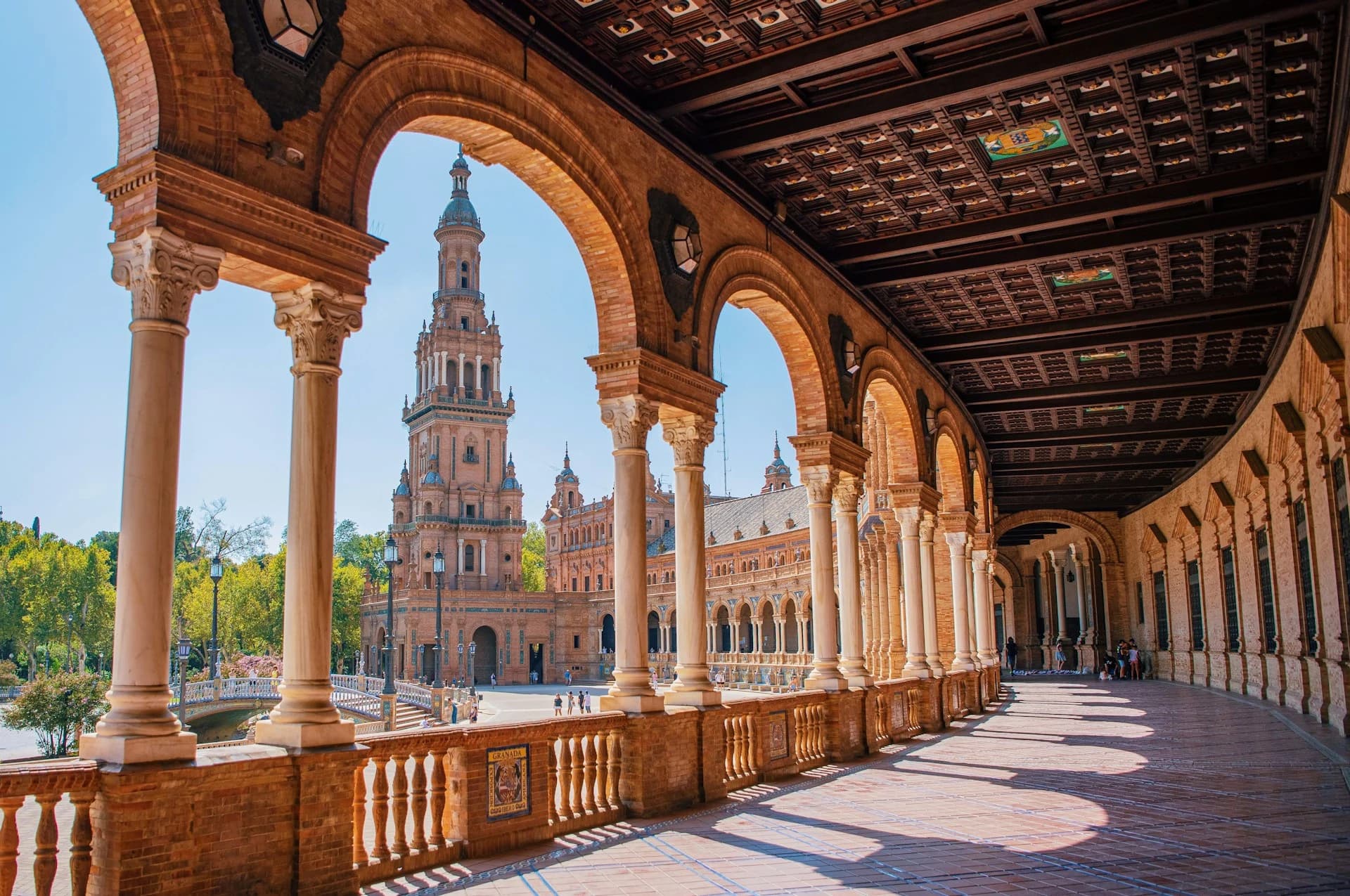
The city's great park, wrapped around Plaza de España, is at its most beautiful in fall. The summer glare gives way to soft, low autumn light, the heat that made the open spaces unbearable is gone, and the shaded avenues and fountains are a genuine pleasure to wander. A late-morning or afternoon stroll here is one of the simplest joys of an autumn trip.
Setas de Sevilla at Sunset
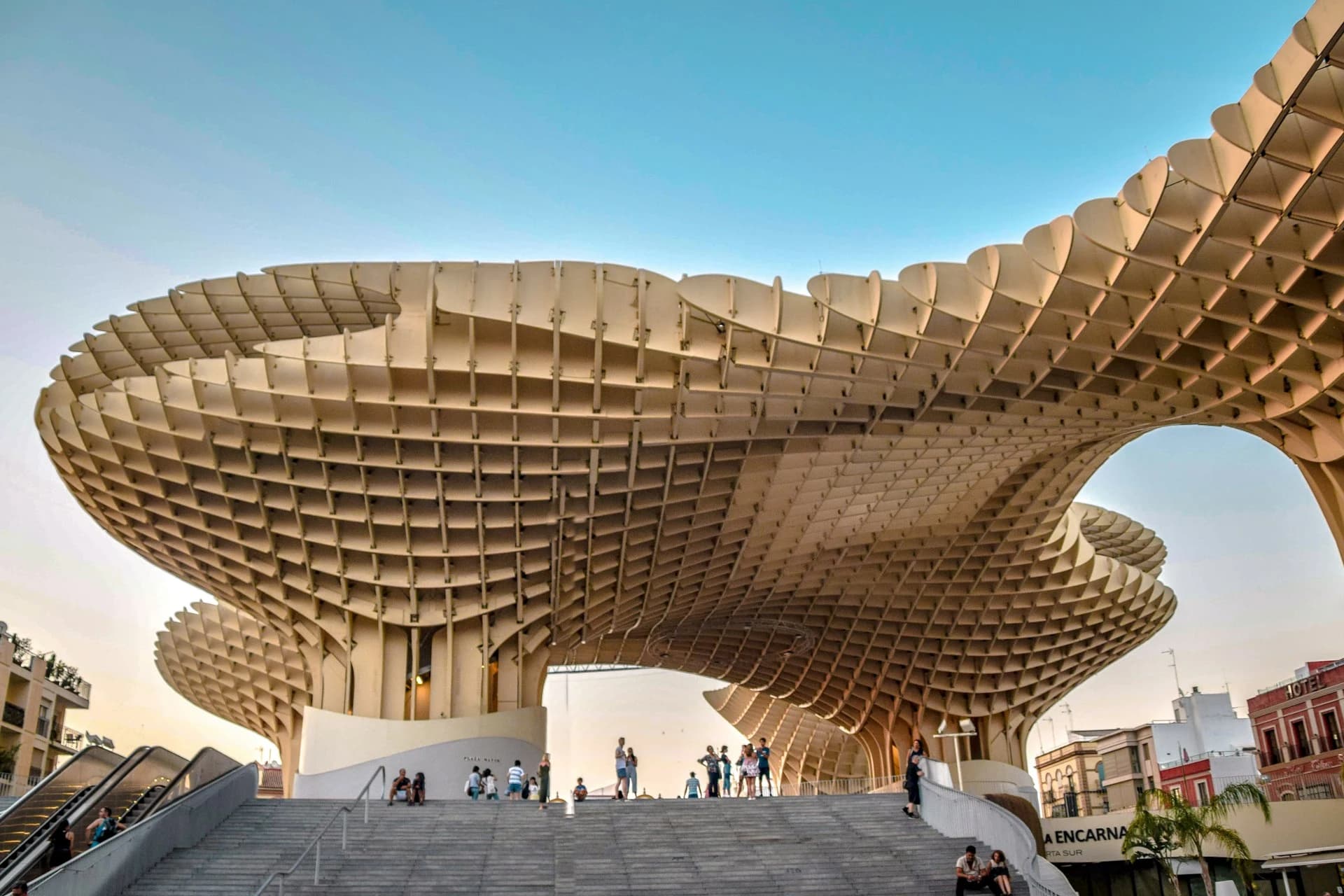
The Setas (the Metropol Parasol, locally "Las Setas") is a vast undulating wooden structure in the Plaza de la Encarnación, with a walkway across its roof. As the sunsets pull earlier through fall, the rooftop view turns golden at a civilized hour, and the cooler air makes the climb far more pleasant than in summer. Time it for the early-evening slot.
Autumn Gastronomy
Fall is when Seville's food turns cozy. Game, hearty stews, mushrooms, and the new season's produce appear on menus, and the reopened bars and restaurants are back to full strength after the August closures. A long autumn lunch, increasingly on a sheltered terrace as November cools, is one of the season's quiet pleasures.
All-Day Plaza de España
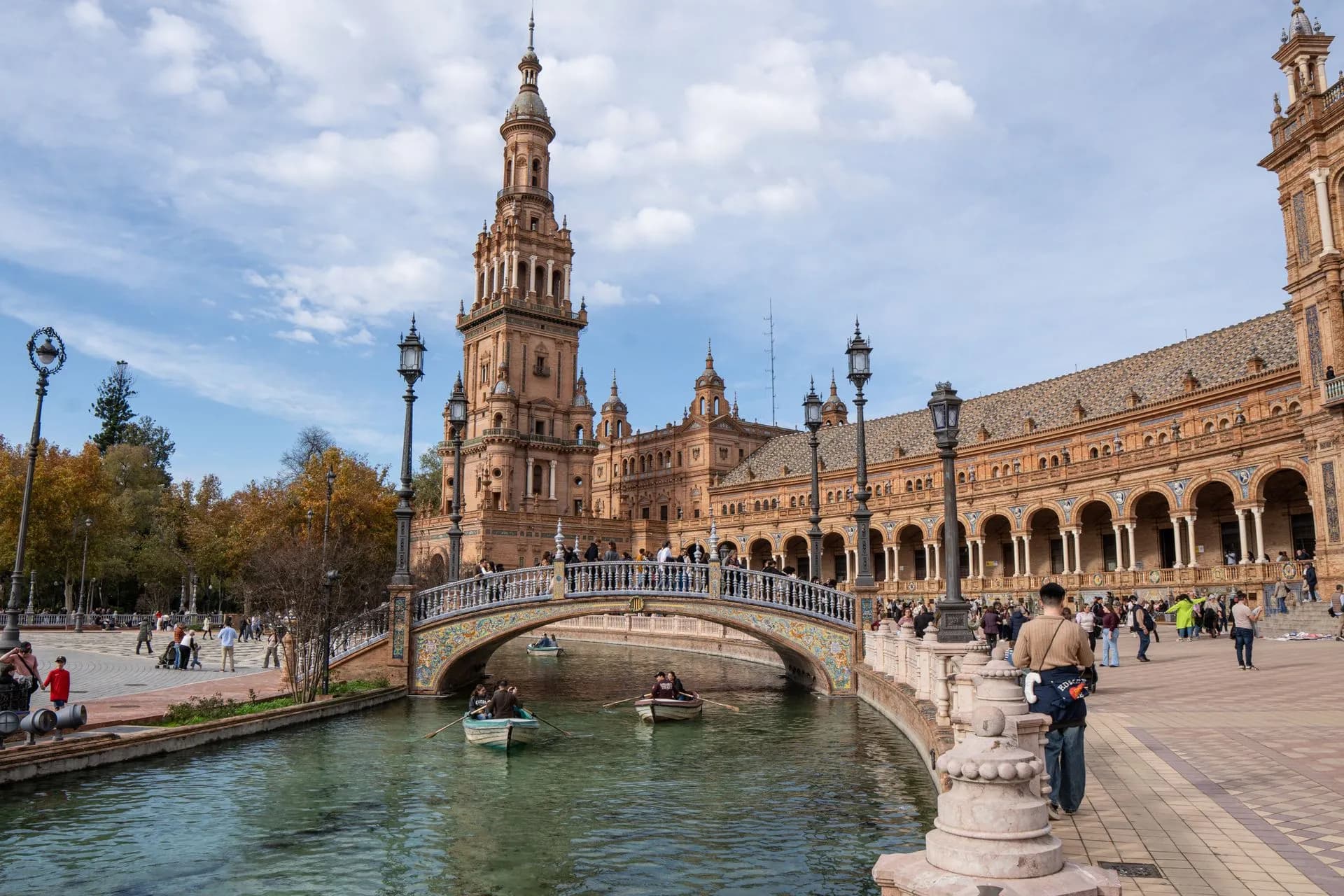
Plaza de España is Seville's most photographed spot, and in fall you can finally enjoy it on your own schedule. The vast tiled square is fully exposed and was punishing at midday in summer; in the mild autumn it is comfortable through the day. Soft morning or late-afternoon light still flatters it best, but you are no longer forced into a sunrise visit to bear the heat.
Is Seville Cheaper in Fall? Prices, Crowds, and Hotel Deals
Fall prices in Seville tell a tale of two halves, and understanding the split is the key to value. The comfortable September and October weather, plus returning tourism and business travel, puts the early season firmly back into autumn high season. Then, as the days shorten and the rain sets in, November falls back toward the winter low. The cheapest fall trip and the best-weather fall trip are at opposite ends of the season.
How Fall Prices Move
September snaps back sharply from the deep-summer low; with the heat easing and the city reopened, central four-star hotels run around €140 a night, firmly high season. October holds in similar high-season territory, easing a little in the final week. November is the turning point: prices fall back toward the winter floor, around €95 a night, the flip side of the cooler, wetter, shorter days. If your priority is the best weather, October justifies its higher price; if it is cost, November is the clear value pick.
Crowds in Fall
Crowds track the prices. September and October are popular autumn months, so monuments and tours stay busy, though nothing like the spring festival crush, and the early morning still beats the lines. November is genuinely quiet, with thin crowds, short queues, and an unhurried feel across the city. Booking the headline monuments ahead is still worth it in September and October; in November you have far more flexibility.
Where the Savings Are
As in summer, the savings in fall come mostly from accommodation rather than activities. Tour and ticket prices for flamenco, the Alcázar, river cruises, and cooking classes stay broadly consistent year-round. What changes is the hotel bill, which drops substantially from the September and October high into the November low. For travelers chasing value, a late-fall trip costs meaningfully less than an early-fall one, which makes November the best time to visit Seville in autumn on a budget while October wins on weather. For the full-year view of how fall compares, see our guide to the best time to visit Seville.
From Our Experience
What we consistently see is that the travelers happiest with a fall trip match the month to what they want, then plan the day around the daylight. A few specifics from our own autumn visits: we walked the full Alcázar gardens at midday in mid-October without once needing shade, something unthinkable in July; a late-October day trip to Córdoba's Mezquita was comfortable from morning to evening; and by the first week of November we were reaching for a jacket the moment the sun dropped around 6 PM. The first rain of the season caught us once on a walking tour and had blown through before we finished a coffee, which is exactly why we tell people not to cancel outdoor plans too soon. The mistake is treating September, October, and November as one season; they are three different trips, and a little planning for the month you have chosen makes all the difference.
Tips for Visiting Seville in Fall
- Pick the month for your priority: October for the best all-day weather and day trips, September for flamenco and a city back to full life (and the Bienal in even years), November for the lowest prices and the calmest streets. Our October, September, and November guides go month by month.
- Use the daytime, which is finally yours: unlike summer, the mild fall days mean you can do the Alcázar, the Cathedral and Giralda, and Plaza de España at a comfortable hour. Front-load the outdoor sights into the day, especially as sunsets pull earlier.
- Mind the clocks on October 25: sunset drops to around 6:30 PM and then near 6:00 PM, so the evenings get dark fast. Save flamenco, dinner, and museums for the night and use the daylight for everything outdoors.
- Pack for changeable weather from October: the dry summer is over. Bring a light layer and a compact umbrella, and keep a flexible indoor option, a cooking class, a museum, or a long lunch, ready for a rainy afternoon.
- Take the day trips back: the inland destinations summer rules out are comfortable again. Córdoba's Mezquita in particular is a pleasure in the cooler autumn air.
- Time a September trip to the Bienal in even years: in 2026 the Bienal de Flamenco takes over the city, so book flamenco evenings and central hotels well ahead if your trip lands then.
- Visiting Seville outside of fall? Our Seville in Summer guide covers the hot, cheap, night-driven season, and the best time to visit Seville sets the whole year side by side.
How We Put This Guide Together
The Spain Travel Insider team built this guide from historical weather records, the city's autumn event calendar, and the seasonal pricing and availability patterns we track across central four-star hotels and the destination's activities. Fall is the most transitional season in Seville, where the difference between an early-September trip and a late-November one is enormous, so we prioritized documented month-by-month patterns and practical timing over a single best-case framing. This guide was reviewed and updated in June 2026. Autumn conditions and event dates vary year to year, so we recommend confirming the Bienal de Flamenco program (held in even-numbered years) and checking the SICAB dates and any specific venue hours in the weeks before your trip. Every month and activity linked here has its own dedicated guide with detailed advice.
Frequently Asked Questions
Is fall a good time to visit Seville?+
Fall is one of the best times, and for many travelers the single best. The brutal summer heat breaks into mild, all-day sightseeing weather, the city returns to full life after the August holidays, and the cultural calendar is at its richest, including the Bienal de Flamenco in even-numbered Septembers. The main thing to plan for is that the season changes a lot across the three months, from a hot September to a cool, wet November, so the month you choose matters.
What is the best fall month to visit Seville?+
October is the best overall fall month, with mild 26°C days that make all-day sightseeing and day trips comfortable, gentler autumn crowds, and prices that ease late in the month. September is the pick for flamenco and a city buzzing back to life, especially in a Bienal year, but the first half can still be summer-hot. November is the cheapest and quietest, ideal for value and calm, but cooler, wetter, and with much shorter days.
What is the weather like in Seville in fall?+
Fall is defined by a steady cool-down. September opens hot at around 32°C before easing into pleasant warm-autumn weather by month's end. October settles into mild 26°C afternoons, the most comfortable all-day conditions of the year. November cools to around 20°C by day and a chilly 10°C after dark. The dry summer ends too: October brings the first real rain and November is one of the wetter months.
Is Seville cheaper in fall?+
It depends on the month. September and October are autumn high season, with central four-star hotels around €140 a night, driven by the comfortable weather and returning tourism. November falls back toward the winter low, around €95 a night, with thin crowds. So early fall is not cheap, but late fall is genuine value. The savings come mainly from accommodation; tour and ticket prices stay broadly consistent year-round.
What is the Bienal de Flamenco in Seville?+
The Bienal de Flamenco is the world's foremost flamenco festival, held in Seville every even-numbered September, including 2026. Performances spread across the city's theaters, tablaos, and historic courtyards for several weeks. If your fall trip falls in a Bienal year, it is worth building one or two evenings around it and booking flamenco and central hotels well ahead.
How short are the days in Seville in fall?+
Daylight shortens noticeably through the season. Early September still has long evenings with sunset near 8:15 PM, but the clocks fall back on October 25, dropping sunset to around 6:30 PM and then near 6:00 PM in November. By late fall the evenings are genuinely dark, so it is best to front-load outdoor sightseeing into the daytime and save flamenco, dinner, and museums for the night.
Does it rain a lot in Seville in fall?+
Rain returns in fall after the bone-dry summer. September is still mostly dry, October brings the first real showers (around six wet days), and November is one of the wetter months of the year. Rain usually comes in short bursts between sunny spells rather than all-day washouts, so from October it is worth packing a light layer and a compact umbrella and keeping a flexible indoor plan ready.
Affiliate note: Some links on this page are affiliate links. If you book through them, we may earn a small commission at no additional cost to you.